Internal vs. External Quality in Fresh Produce: Good Looks Don’t Mean Good Quality
- Quality Control App
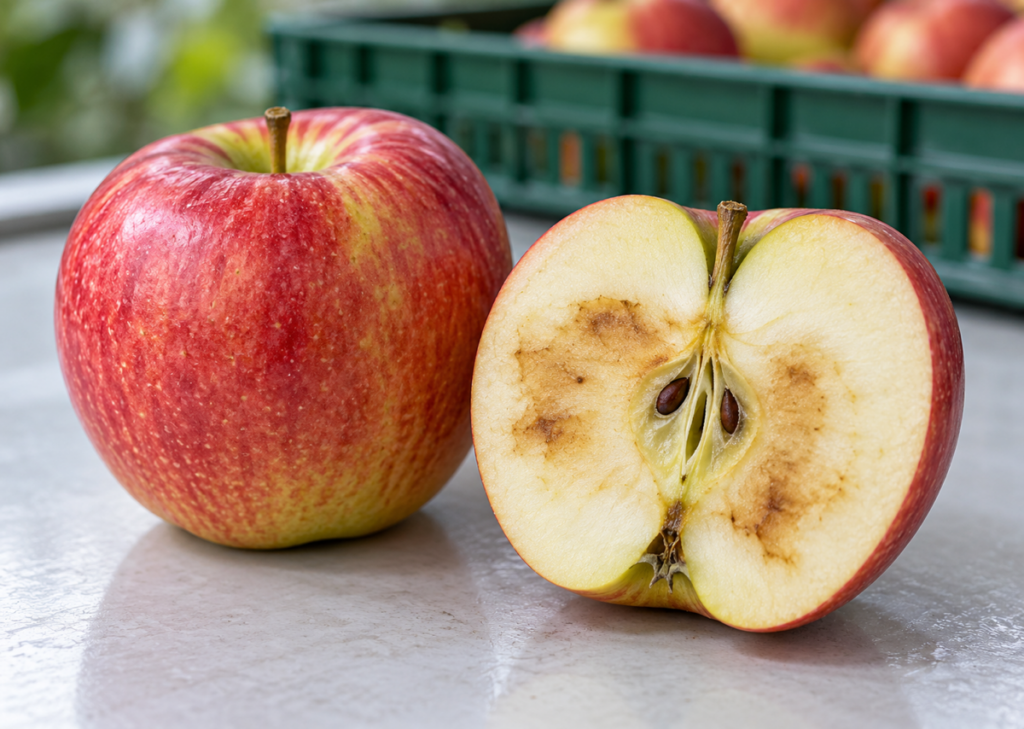
External quality is what you can see: color, size, shape and surface defects. Internal quality covers attributes that appearance alone cannot confirm, including soluble solids (°Brix, an indicator of sugar content), firmness, dry matter and hidden bruising or breakdown.

This article explores a common quality manager dilemma, and why fresh produce internal quality measurement needs its own place in QC: produce can look flawless and still deliver poor eating quality or fail a buyer’s internal specifications. Surface-only grading can leave these commercially critical failures undetected.
Key takeaways
- External quality covers visible attributes. Color, size, shape and surface defects can be assessed through visual inspection or computer vision.
- Internal quality requires a separate assessment. Measurements such as °Brix, firmness and dry matter, alongside checks for hidden damage, provide evidence that appearance alone cannot supply.
- Good looks do not guarantee good eating quality. Produce can pass visual grading and still disappoint consumers or fail internal specifications.
- Robust QC brings both layers together. Combine external assessment with targeted instruments or sampling, and keep the findings in the same inspection record.
What external quality control checks cover
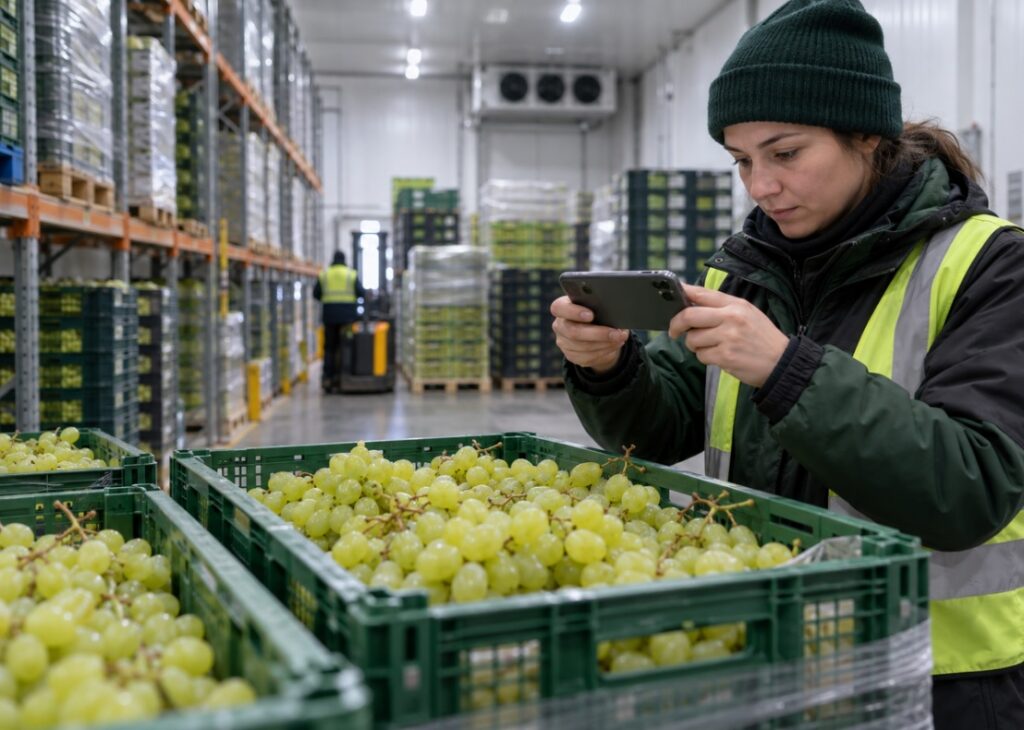
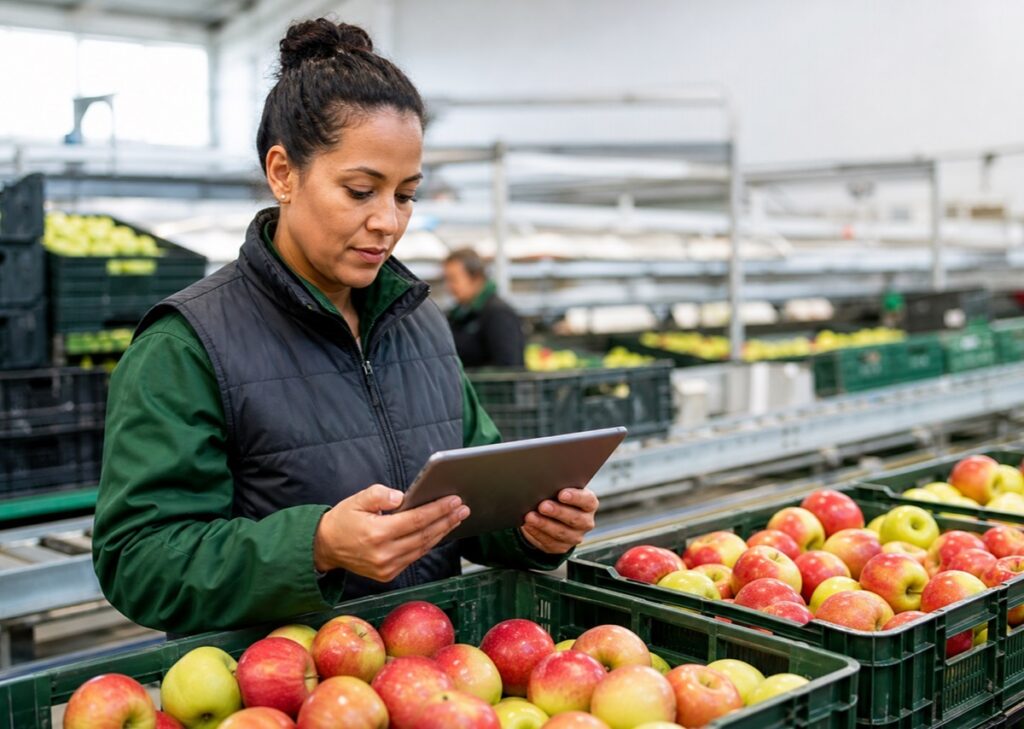
External quality focuses on the visible layer of a fruit or vegetable. It’s at this stage that color, size, shape, surface blemishes and mechanical damage make their way into an inspection record. Most traditional grading captures these details through an actual physical inspection. Computer vision reads these directly and instantly.
The strengths of computer vision in this context are obvious: it makes external quality checks faster and more scalable. The quality inspector can cover more produce in a much shorter space of time, and they can certify a crate with both certainty and an objective record to fall back on. But the limits of external quality remain, even with computer vision: by definition, it’s skin-deep, and as any quality control manager knows, the issues that affect commercial viability can reach far below the skin.
Internal quality is harder to measure
Beneath the surface, every piece of fresh produce has a layer that’s hidden from view, and susceptible to defects. Important internal produce quality features include:
- Sugar content (Brix)
- Acidity
- Firmness
- Dry matter
- Internal bruising
- Hollow heart
- Internal breakdown
All of these matter commercially, because they directly affect ripeness, shelf life, and ultimately, eating quality. Buyer acceptance often hinges on attributes inspectors (and computer vision doing an external check) can’t see.
| External quality | Internal quality | |
|---|---|---|
| Examples | Color, size, shape, surface defects | BRIX, firmness, dry matter, internal bruising |
| Measurement method | Visual or with computer vision | Refractometer, durometer, NIR, destructive sampling |
| Speed of inspection | Fast, non-destructive | Often slower or sample-based |
| What it predicts | Appearance, obvious defects | Eating quality, ripeness, shelf life |
| Risk if ignored | Visible rejects | Perfect-looking product that fails downstream |
What are Brix and dry matter, and why are they important for produce quality?
A Brix measurement captures soluble solids in a fruit’s juice, which is mostly sugars plus some acids and other dissolved compounds. Dry matter is everything left when you remove all the water: sugars, but also starch, fiber, cell walls, proteins, and in some fruit, oil. So Brix is a subset of dry matter, the dissolved part.
The link is strongest in fruit that accumulates starch on the tree and converts it to sugar after harvest, such as kiwifruit, apples, mangoes, and pears. At harvest, a lot of the eventual sweetness is still locked up as starch, which doesn’t show up in a Brix reading. Measure Brix then and you underestimate how sweet the fruit will become. Dry matter captures the starch too, so it’s a better predictor of eating quality once the fruit ripens. That’s why major produce organizations like Zespri use dry matter at harvest as an important taste indicator.
What quality defects can’t be seen on the surface of produce?
Surface-perfect produce can still fail. A fruit or vegetable that passes surface grading can carry easy-to-miss problems that receivers, retailers, or shoppers catch later. Without internal defect detection earlier in the chain, receivers often catch these through cut tests and refractometer sampling, with disastrous results for the supplier relationship.
Here are some examples of failures that easily slip through surface grading:
- Internal browning in apples is a recognized group of storage disorders, including flesh browning in cultivars like Cripps Pink, and senescent breakdown in fruit stored too long. The skin can look perfect while the flesh is brown.
- Hollow heart in watermelon is a cavity or split in the flesh, usually linked to poor pollination or uneven growing conditions. The outside gives no reliable sign, so it’s typically found when someone cuts the fruit.
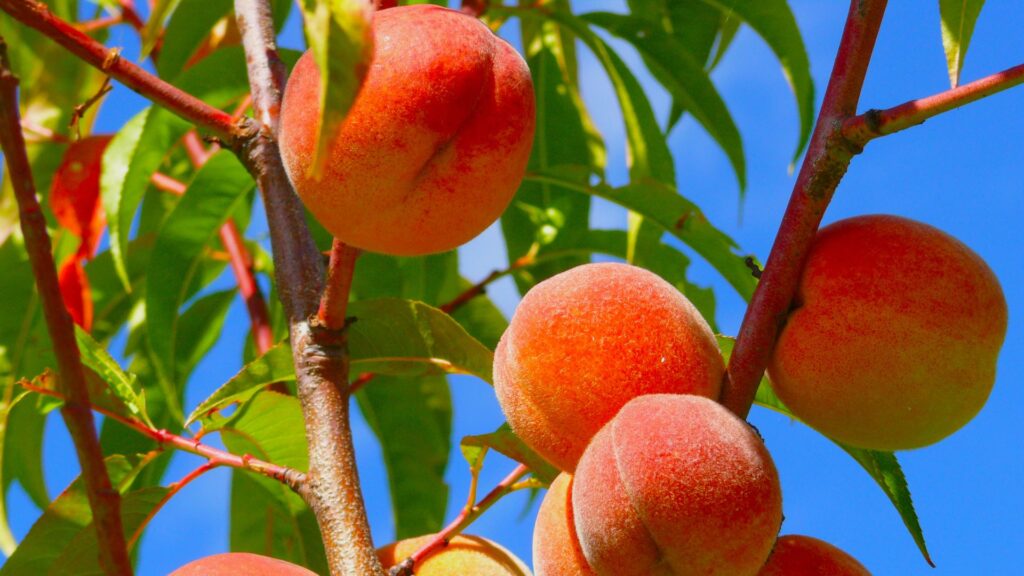
- Ripe-looking but under-Brix fruit is another common failure, since color and sugar don’t always track together. Apples can develop red blush before they reach maturity, citrus is often degreened with ethylene, and tomatoes can color without full flavor development.
How external and internal quality work together
Internal vs. external quality comes down to two different questions about the same product.
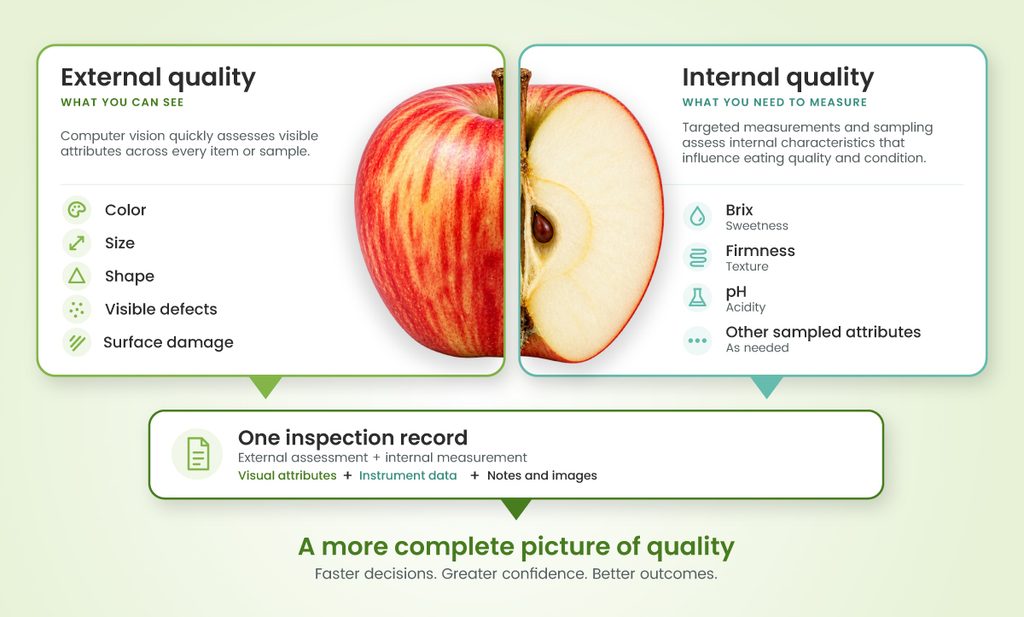
- Visual inspection can quickly assess attributes such as color, size and visible defects across a shipment.
- Internal quality requires a different layer of measurement, using sampling and instruments for Brix, pH and fruit firmness testing to assess characteristics such as Brix, firmness and pH.
Strong quality control brings these two layers into the same inspection process. Teams can move quickly on attributes that can be assessed visually, while applying targeted measurements where appearance alone cannot tell the full story.
Modern quality control software enables exactly this kind of data fusion
Modern QC platforms can bring external assessment and internal measurements into the same inspection record. Computer vision supports fast, standardized assessment of visible attributes, while connected instruments such as refractometers and firmness testers capture measurements that cannot be determined from the surface alone.
Instead of treating these as separate QC processes, teams get one view of both surface quality and internal condition.
How Clarifresh brings both sides of quality into one inspection
Clarifresh uses computer vision to support standardized detection and grading of visible produce attributes and defects. This gives QC teams a faster, more consistent way to capture the external layer of quality during an inspection.
For attributes that require physical measurement, Clarifresh can integrate data from instruments such as refractometers and firmness testers into the inspection workflow. Measurements such as Brix, firmness and pH can therefore sit alongside visual quality data in the same digital record, giving teams a more complete view of each inspected lot.
Book your demo to see how Clarifresh brings external quality assessments and internal measurements together in one inspection record.
Frequently asked questions
What’s the difference between internal and external quality in produce?
External quality is what you can see. It covers color, size, shape, and surface defects. Internal quality is what you can’t: sugar content (Brix), firmness, dry matter, and internal breakdown. Produce can pass on appearance and still fail on internal quality.
How is internal produce quality measured?
Internal attributes are measured with instruments: refractometers for Brix, durometers for firmness, near-infrared for dry matter. Alternatively, they can be measured by destructive sampling. Some platforms integrate these instrument readings into the same digital inspection record as visual grading.
Can computer vision detect internal defects?
Standard computer vision reads the surface (color, size, shape, visible defects). Detecting internal quality generally requires instruments or sensor-based methods, which a QC platform can integrate alongside visual grading rather than replace.