Climate-Affected Produce: Adapting Quality Control For Climate Stress
- Quality Control App
The New Normal in Fresh Produce
Climate change is rewriting the rules of agriculture. Droughts, heatwaves, and erratic rainfall used to be outliers, but they’re becoming the baseline.
These shifts are giving rise to what researchers call climate-affected produce: fruits and vegetables shaped not only by genetics and soil, but by stress. Their flavor, firmness, or appearance may differ from what buyers expect.
Not because something went wrong, but because the climate did.
For producers, that variability represents both risk and opportunity. The risk: more rejections, higher waste, and tighter margins. The opportunity: a chance to modernize how “quality” is defined, inspected, and communicated throughout the supply chain.
The Difference Between Climate-Affected and “Ugly” Produce
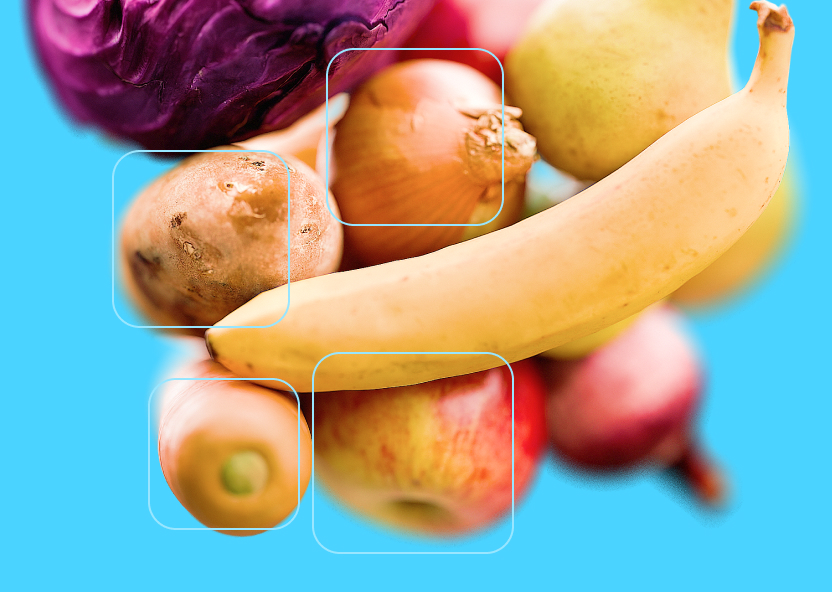
The “ugly food” movement taught consumers to see beauty in imperfection. Campaigns like “Wonky But Wonderful” in the UK or “the odd bunch” in Australia helped normalize minor cosmetic flaws — the superficial blemishes or unusual shapes that once led to rejection.
But climate-affected produce goes further.
- “Ugly” produce suffers cosmetic flaws but tastes the same.
- “Climate-affected” produce undergoes chemical and sensory changes driven by stress.
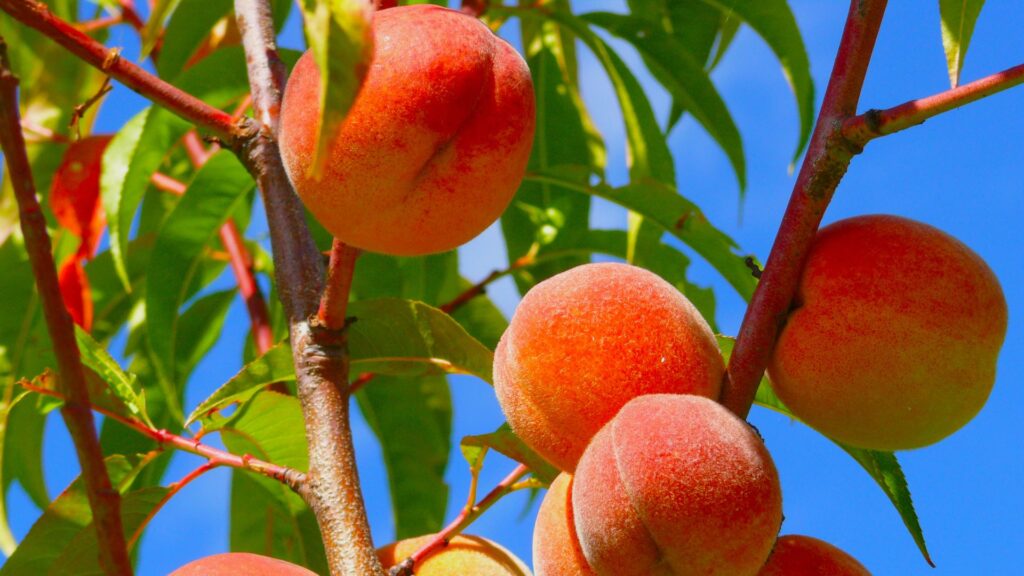
Under drought, for example, apples may become sweeter but less firm. Onions can grow more pungent, and chilies sometimes get hotter. These are measurable differences in organoleptic properties: the characteristics that engage our senses.
This distinction matters for everyone involved in quality control. Systems designed for a stable, temperate climate are calibrated to recognize uniform texture, sweetness, and color as quality indicators. But what happens when climate itself changes those baselines? When “different” no longer means “defective”?
To maintain both consistency and fairness, the fresh produce sector will need to update how it measures quality. The goal should not be to lower standards, but to make them fit for a warmer, more volatile world.
Consumers Will Play a Vital Role in Managing the Impact of Climate-Affected Produce
While industry stakeholders may understand the biological causes behind climate-affected produce, consumers are still catching up. Shoppers avoid climate-affected produce unless it’s discounted.
That poses two major problems:
- Economic pressure: perpetual discounts shrink already slim grower margins, discouraging investment in sustainable supply chain adaptation.
- Perceptual bias: discounting reinforces the notion that “climate-affected” equals “inferior.”
The fact is that consumers strongly equate surface appearance with quality. Perfectly smooth, glossy fruit has become shorthand for freshness, even when internal defects or reduced nutritional quality tell a different story.
The persistence of the “perfect fruit bias” shows how deeply aesthetic expectations shape consumer trust. Changing that perception will require data transparency from suppliers, education at the retail level, and clear storytelling at the point of sale.
Rethinking Quality Standards in a Climate-Stressed Supply Chain
Traditional inspection systems are built on the idea of consistency: that produce of the same variety should look, feel, and taste roughly the same season after season. But climate change agriculture introduces variability that these systems can’t easily accommodate.
Rigid pass/fail grading frameworks will need to evolve. In these frameworks, a slightly less firm apple or a sweeter-than-usual orange might fail inspection. That can inadvertently push edible, nutritious food out of the supply chain.
Instead, the industry needs adaptive quality control: a model that responds to natural variability without compromising safety or transparency.
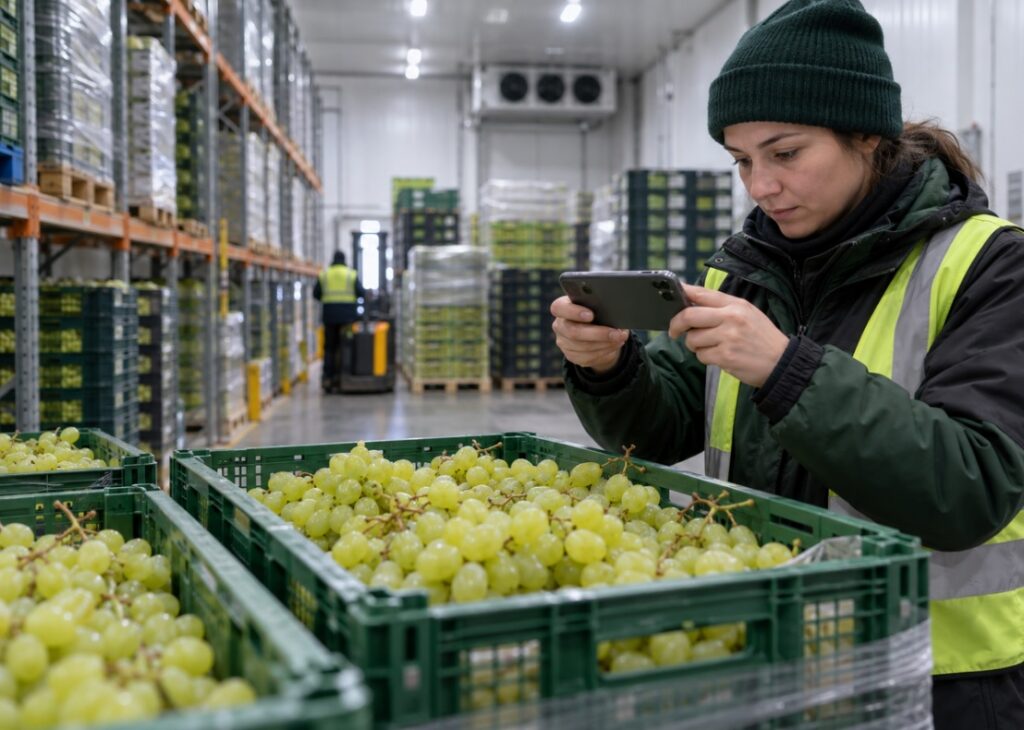
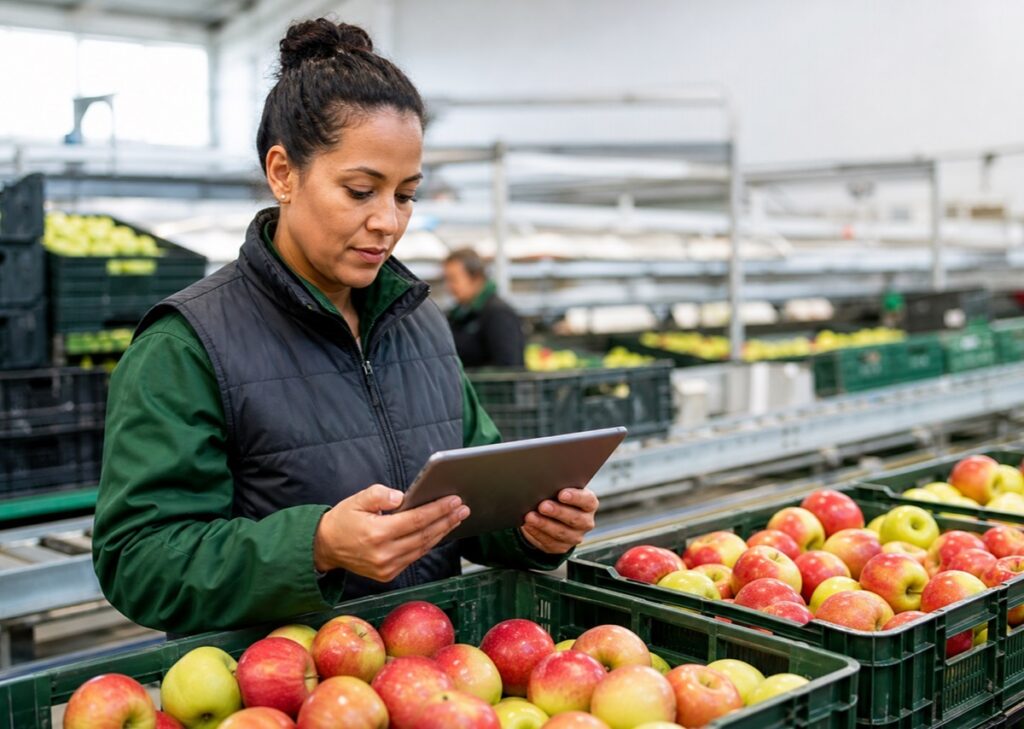
AI-powered QC platforms make this possible by capturing real-time data on attributes like color, size, firmness, and sweetness (Brix), and comparing them not to static “ideal” thresholds but to dynamic, customizable ones.
For example:
- A packhouse facing a drought-affected season could temporarily lower firmness thresholds while tightening on other metrics like color uniformity or Brix.
- Retailers could use that same data to adjust pricing and labeling strategies, maintaining quality assurance without rejecting entire batches.
The Conversation’s research also showed that consumer perception can be reframed. When climate-affected apples were labeled as “resilient: survived the drought,” consumers became significantly more open to purchasing them.
By framing climate-affected produce as resilient produce, retailers can help consumers see it as a symbol of adaptation and sustainability and not compromise.
Data as the Vital Bridge Between Quality and Trust
In this context, digital QC data becomes a vital communication asset in the drive to reduce waste. Each data point captured in inspection can help build a narrative of transparency and resilience.
For example:
- Retailers can use real-time QC dashboards to trace exactly how weather affected each batch and communicate that story credibly.
- Exporters can use historical QC data to show how local conditions impacted sensory characteristics, providing context for buyers abroad.
- Growers can leverage the same data to defend product value and negotiate fairer prices when conditions shift quality parameters beyond their control.
By measuring and validating quality in this way, all parties can see how “different” can still mean “good.”
Practical Pathways for a Flexible Future
For growers and packers:
Use AI-powered QC to measure and understand the nuances of every harvest. Climate-stressed fruit may have different densities, sugar levels, or visual profile. Real-time analytics help determine where each batch fits best. This enables proactive decisions: which lots to sell fresh, which to divert to processing, and which to prioritize for export.
For retailers:
Leverage QC insights to educate consumers and train in-store teams. When produce teams understand why certain attributes look or taste different, they can better convey that story to shoppers. Integrating QC data into consumer-facing campaigns (such as “grown through the heat” or “resilient harvest” labels) can turn variability into a selling point.
For distributors and supply chain managers:
Flexible grading frameworks reduce waste by opening alternative pathways for imperfect but edible produce. When QC systems can adapt on the fly, batches can be rerouted before they’re rejected. This agility is distributors’ best chance of transforming what would have been waste into value.
Collectively, these practices form a new model of climate resilience: one that balances data precision with flexibility and human judgment.
From “Perfection” to Precision: Flexibility Is the New Standard
The old “Goldilocks” model of quality, where every fruit must be just right, no longer fits the realities of a changing planet. Perfection isn’t sustainable when the climate itself is unstable. But precision, backed by data and adaptable systems, is.
By building adaptive QC frameworks, fresh produce businesses can ensure that every piece of fruit is evaluated on its true merit, not its conformity to an outdated ideal. The result: less waste, stronger supplier relationships, and a supply chain that rewards resilience over rigidity.
Instead of resisting that change, the industry’s competitive advantage will lie in how well it adapts. Flexible, data-driven quality control gives growers, packers, and retailers the tools to evolve their standards intelligently, protecting both food integrity and financial sustainability.
Book your demo to learn how Clarifresh enables fresh produce businesses to adapt and win through times of unprecedented change.