Key Takeaway
- Cheese is one of the most complex foods to inspect consistently
- Manual cheese inspection is subjective, slow, and difficult to scale
- AI enables objective, consistent, full-coverage cheese inspection
- The same computer vision systems proven in produce QC now apply to dairy
- The result: less food waste, fewer claims, and fewer quality disputes
From the outside, many cheeses appear uniform. Inside the dairy supply chain, however, cheese is one of the most difficult food products to inspect and standardize. Variations in milk composition, aging conditions, humidity, and handling can dramatically affect texture, color, structure, and shelf life. And all of this can even happen within the same batch.
For decades, dairy quality control has relied heavily on manual inspection and sampling. Skilled inspectors play a critical role, but the process is slow and subjective. It’s also increasingly out of touch with the scale and complexity of modern dairy operations.
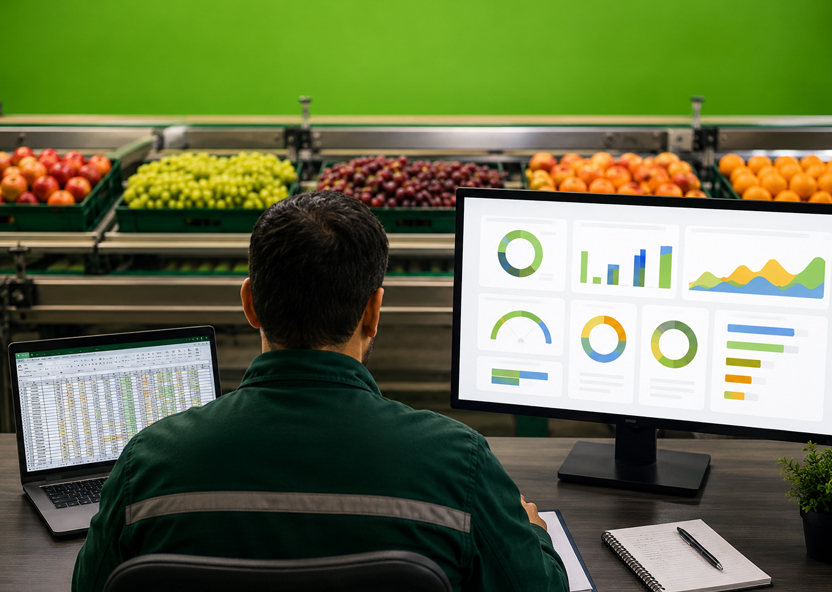
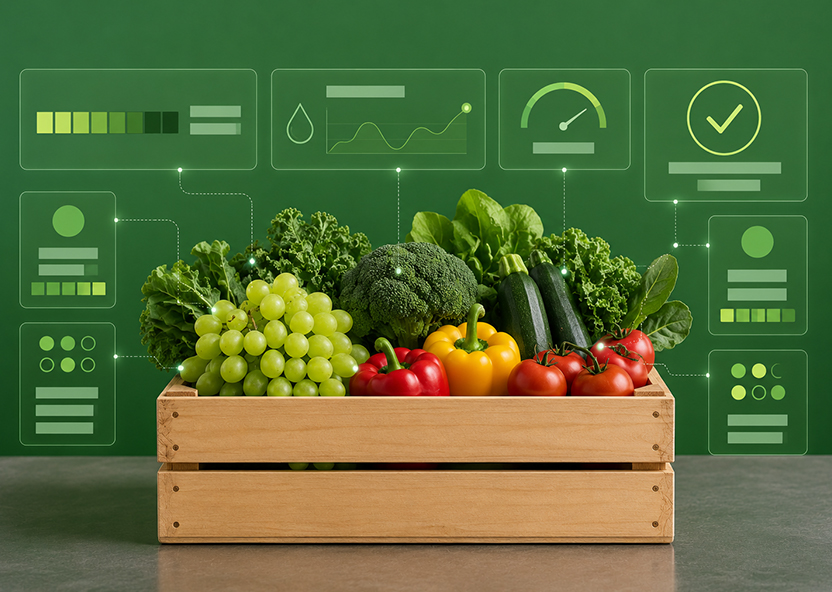
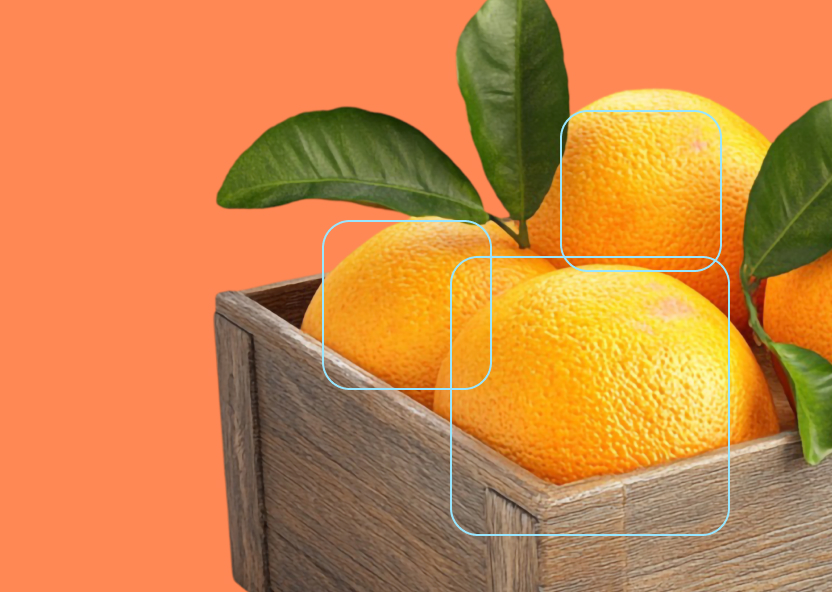
A similar challenge once defined fresh produce. Fruits and vegetables were long considered “too variable” for automation, until AI-powered inspection proved otherwise.
That same transformation is now reaching dairy.
Why is cheese quality so difficult to standardize?
Cheese combines biological complexity with long production timelines.
Unlike many packaged foods, cheese continues to evolve after production. Aging, moisture migration, microbial activity, and environmental exposure all shape the final product. Two wheels produced on the same day can diverge significantly weeks or months later.
Several factors complicate standardization:
- Humidity and temperature sensitivity during aging
- Wide variety of cheese types, from fresh and soft to semi-hard and aged
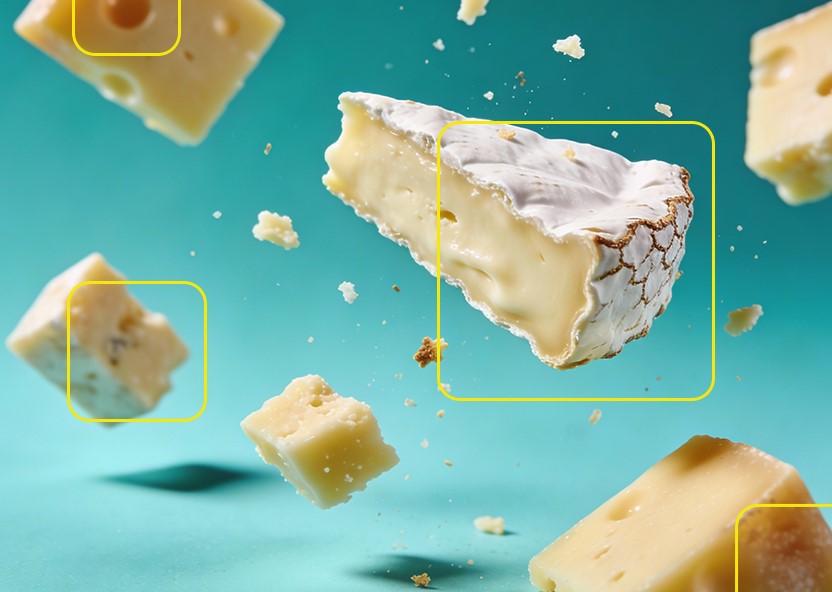
- Visual and structural complexity, including rinds, veins, eyes, and internal texture
- Non-linear defect development, where minor early issues can escalate over time
This variability makes fixed rules and static thresholds ineffective. What looks acceptable at one stage may become a defect later, and visual cues often mask deeper structural problems.
What types of cheese defects cause the biggest financial losses?
Some defects affect appearance, others food safety, others shelf life. The most costly issues often combine multiple risk factors.
Common high-impact cheese defects include:
- Mold growth, both surface and internal
- Micro-cracks and fissures that allow contamination or moisture loss
- Texture defects, such as brittleness, excessive softness, or irregular body
- Discoloration and uneven rind development
- Foreign contamination, including packaging-related defects
- Deformation, especially in stacked or transported cheeses
Many of these defects are subtle in early stages and easily missed during spot checks, yet they drive rejections and claims downstream.
How is cheese quality inspected today, and where does it fail?
Similar to fresh produce, most dairy quality inspection still relies on a combination of:
- Manual visual checks
- Physical probing or cutting (sampling)
- Experience-based judgment
- Periodic lab testing
While effective at small scales, these methods struggle in modern operations.
- Sampling misses variability: Inspecting a subset assumes the rest of the batch behaves the same way. In reality, defects often cluster unpredictably.
- Subjectivity introduces inconsistency: Two inspectors may grade the same cheese differently, especially under time pressure.
- Manual inspection doesn’t scale: As volumes increase, inspection becomes a bottleneck rather than a safeguard.
The result is reactive quality control in which defects show up late, often after shipping or at retail.
What risks does inconsistent cheese quality create for brands and retailers?
Inconsistent quality creates compounding risk across the dairy supply chain.
- Returns and claims increase operational costs
- Contract disputes arise from grading disagreements
- Brand trust erodes when quality varies from shipment to shipment
- Recalls become more likely when defects go undetected
- Food waste increases, impacting margins and sustainability goals
In highly centralized dairy supply chains, defects discovered late can trigger cascading consequences across multiple stakeholders.
Defect-related recalls can affect hundreds of thousands of cases and trigger 5–15% upstream volume adjustments, even when defects originate far downstream. For brands and retailers, this translates into recalls, strained supplier relationships, contract disputes, and sudden inventory gaps. These are driven by issues that were invisible until it was too late.
Why doesn’t traditional automation solve the cheese inspection problem?
Conventional automation struggles with biological products like cheese. An automated inspection that relies on rule-based systems is an improvement, but an inadequate one.
Rules-based systems require predefined thresholds. Cheese does not behave consistently enough to fit rigid rules. For example, sensors can measure temperature or humidity, but they cannot interpret complex visual and structural patterns.
Edge cases overwhelm traditional automation. Slight discoloration may be harmless in one cheese type and critical in another. Static systems cannot adapt without constant reprogramming.
What makes AI and computer vision suitable for cheese inspection?
AI food inspection systems learn patterns rather than enforce rules.
Computer vision models can:
- Automate surface texture analysis and spot micro-variations
- Perform color analysis, check distribution and deviation
- Monitor shape consistency and deformation
- Identify pattern anomalies linked to mold or cracks
Machine learning allows systems to improve as more data is collected, adapting to different cheese types, aging stages, and environments.
Instead of asking “does this meet a fixed rule,” AI asks: how does this compare to thousands of similar cheeses, and what does that mean for quality and shelf life?
How does AI actually inspect cheese in practice?
AI-based cheese inspection typically involves:
- High-resolution cameras capturing full-surface images
- Surface scanning and texture modeling to detect irregularities
- Pattern recognition to identify defects and anomalies
- Classification and scoring based on objective criteria
- Data aggregation for trend analysis and benchmarking
Inspection can occur at multiple points, from post-production to aging, packing, and distribution.
Crucially, inspection moves from periodic checks to continuous visibility.
How is AI-based cheese inspection different from traditional QC?
While both approaches aim to protect quality and safety, they operate very differently in practice, especially at scale.
| Traditional Cheese Inspection | AI-Based Cheese Inspection |
| Human visual checksExperience-based, fatigue-prone | Computer visionHigh-resolution imaging, pattern recognition |
| SubjectiveVaries by inspector, shift, and site | Objective & consistentSame criteria, every unit, every time |
| SamplingSmall subset assumed representative | 100% coverageEvery cheese inspected, not inferred |
| ReactiveIssues found after defects emerge | Preventive & predictiveEarly signals, trend-based alerts |
| Hard to standardizeTraining-dependent, hard to replicate | Fully standardizedShared definitions across facilities |
The shift is not just faster inspection, but fundamentally better information.
Where in the dairy value chain does AI create the biggest impact?
AI-driven inspection delivers value across the dairy supply chain:
- Producers gain early visibility into defect patterns
- Aging facilities can monitor quality evolution over time
- Packing houses improve grading accuracy and consistency
- Distributors reduce disputes and claims
- Retailers receive more predictable quality and shelf life
Each handoff becomes clearer, with shared data rather than subjective opinions.
How does AI-based inspection reduce waste and increase yield?
Waste often begins with late detection.
AI enables earlier identification of issues, allowing better routing decisions. Cheese nearing quality thresholds can be redirected, repurposed, or prioritized rather than rejected outright.
Improved sorting reduces over-rejection and prevents good product from being discarded due to uncertainty. Over time, trend analysis supports process improvements that reduce defect rates at the source.
What does “data-driven cheese quality” actually mean?
Data-driven quality management moves beyond pass/fail inspection.
It means:
- Tracking defect trends by batch, facility, or condition
- Benchmarking performance across time and partners
- Linking inspection outcomes to operational decisions
- Using quality data to improve consistency, not just compliance
Quality becomes measurable, comparable, and improvable.
How is this similar to what already happened in fresh produce?
Fresh produce once faced the same objections: too variable, too complex, too subjective.
AI-powered inspection changed that. In large, globally distributed produce operations, digital quality systems have replaced fragmented, manual checks with a shared quality language. This shift has enabled real-time visibility across regions, reduced subjectivity in inspections, and supported more proactive quality decisions across the supply chain.
Cheese follows the same trajectory. The technology is proven; the category is expanding.
What does this mean for the future of dairy quality management?
The future of dairy quality is not more inspection, but better insight.
AI shifts dairy quality control from a defensive function to a strategic one. Inspection becomes the foundation of quality intelligence, informing sourcing, production, logistics, and retail decisions.
As dairy supply chains grow more complex and expectations rise, objective, scalable inspection will become less optional and more essential.
FAQ
What is AI-based cheese quality control?
AI-based cheese quality control uses computer vision and machine learning to assess cheese appearance, structure, and defects objectively and consistently at scale.
Can AI detect mold and micro-defects in cheese?
Cheese mold detection is one of the major benefits of AI quality control. High-resolution imaging and pattern recognition enable detection of early-stage mold, cracks, and surface anomalies that are difficult to spot manually.
Does this work for all cheese types and shapes?
AI systems can be trained across multiple cheese varieties, shapes, and aging profiles, adapting to category-specific characteristics.
How long does it take to implement such a system?
Implementation timelines vary by facility and scope, but many operations begin seeing usable insights within weeks.
Does AI replace human quality teams?
No. AI augments quality teams by removing repetitive inspection tasks and providing objective data, allowing experts to focus on higher-value decisions.
From Inspection to Intelligence, Across the Food Supply Chain
Cheese inspection has always been complex. What’s changing is the ability to manage that complexity and deliver reliable quality assurance to the dairy industry at large.
AI-based food quality inspection brings consistency, scale, and objectivity to one of the dairy industry’s most challenging processes. As fresh produce has shown, when inspection becomes data-driven, quality becomes manageable, measurable, and improvable.
For dairy, that shift is just beginning.
For teams rethinking cheese grading at scale, seeing how AI-based inspection works in real operations can be a useful next step.