How to Get Quality Control Vendors in the Era of Accessible AI
- Quality Control App
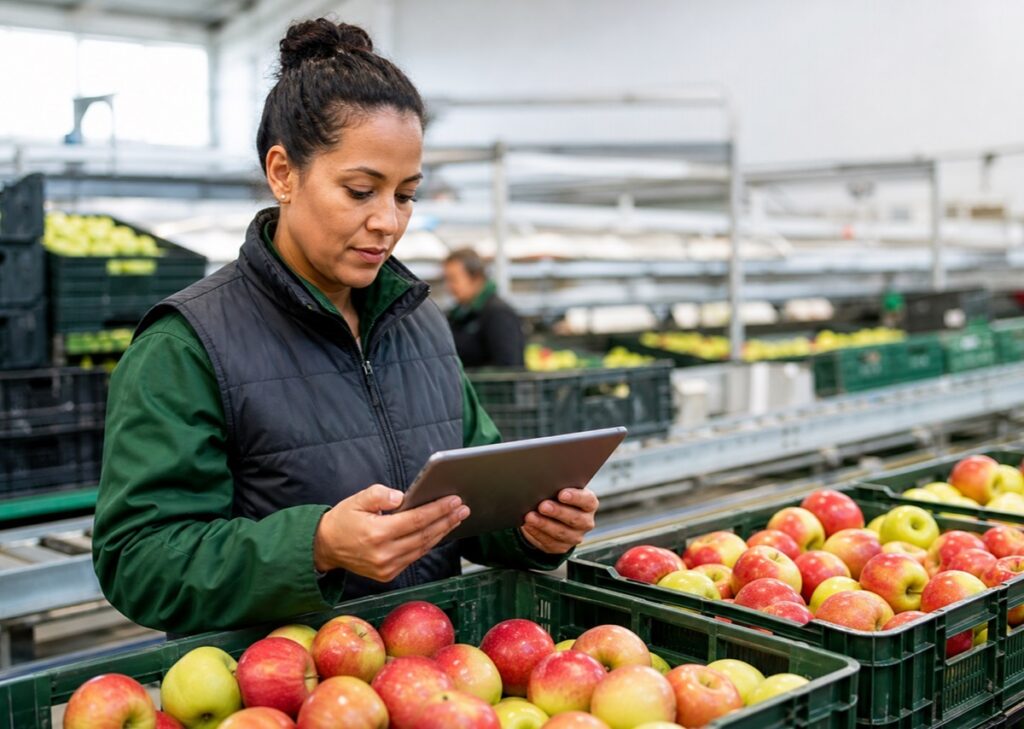
Advanced quality control (QC) systems were the domain of large corporations. Multinational exporters and supermarket giants could afford the labs, custom hardware, and IT staff required to digitize inspections. Smaller growers and distributors were left with clipboards, and spreadsheets, forced to make the most of manual, subjective inspections that hadn’t changed in decades.
That era is, thankfully, over. Cloud platforms, mobile apps, and AI-driven defect detection have made sophisticated quality control accessible to businesses of all sizes. The Agriculture Supply Chain Management Market is projected to grow from $731 million in 2024 to over $1.6 billion by 2032, driven largely by this shift toward accessible technology.
What used to be a luxury is quickly becoming a necessity. But with more vendors entering the space every year, how do you know which one is the right fit for your operation?
Your Choice of QC Platform Can Make or Break Business
Industry studies estimate that up to 30% of fresh produce is lost post-harvest, much of it due to inconsistent handling and inspection. At the same time, retailers and importers are demanding greater transparency and standardized reporting from suppliers.
AI-powered quality control has the potential to cut shrinkage, reduce rejections, and standardize quality across regions. But the system only works if the vendor you choose can deliver on accuracy, and usability at scale. Picking the wrong partner risks turning QC into yet another bottleneck.
The Democratization of QC Technology
For decades, quality automation came with barriers: hardware investment, on-premise servers, complex setup. Only large corporates could play.
Today, it looks very different:
- Cloud-native platforms require little more than a smartphone or tablet to start inspections.
- Mobile apps mean quality control can happen in the field, packhouse, or distribution center, with or without connectivity.
- AI-powered defect recognition allows even small teams to apply the same grading standard across every shipment.
The technology is available to everyone. The challenge is no longer access, but evaluation. With dozens of vendors claiming to offer AI quality control, you need to know how to separate real value from empty promises.
Key Questions to Ask QC Vendors
1. Scalability & Fit
Quality control needs today may look very different a year from now. The right system should grow with you, from handling a few pallets a day to managing multi-site, high-volume inspections. If scaling means adding complexity or costs, the vendor may not be built for long-term partnership.
Best practice: Look for platforms with batch inspections, so you can group truckloads or pallets while keeping every item traceable.
2. Technology & Accuracy
AI is only as good as the data behind it. A vendor should be able to explain how their system is trained, which crops and defect types it covers, and how often the library is updated. Otherwise, you risk blind spots in inspections or inconsistent grading.
3. Data & Integration
Quality data only has value if it flows across business systems and can be accessed by the right people at the right time. Ask how inspection results feed into ERP, or supplier scorecards. If the data stays siloed in PDFs or spreadsheets, you will miss the opportunity to act quickly on trends.
Best practice: Modern dashboards provide real-time KPIs and defect trends, giving managers instant visibility across regions and suppliers.
4. Usability & Training
Professionals in the fresh produce are not impressed by tech hype. They need to know that a new tool is actually solving their problems. Look for mobile-first platforms with simple interfaces, offline capabilities, and transparent grading logic. If reports are confusing or overly technical, adoption will lag and so will ROI.
Best practice: Smart QC reports show exactly why a lot passed or failed, making results clear to both internal teams and external partners.
5. Support & ROI
Even the best software needs support. Ask vendors about their onboarding timelines, customer service responsiveness, and evidence of ROI. If they cannot share case studies with concrete results, like faster inspections or fewer rejections, that is a red flag.
Red Flags to Watch For
Even with the promise of AI-driven QC, not every vendor will deliver what you need. Watch out for these warning signs during your evaluation:
- Vague promises: “Our AI catches everything” without proof of how defect grading actually works.
- Hidden costs: hardware lock-ins, long onboarding timelines, or extra fees for features you assumed were included.
- Poor collaboration tools: If the vendor cannot help you securely share quality specs with growers and partners, they are not equipped for today’s supply chain reality.
A Success Story: Efficiency in Action
One leading European wholesaler discovered just how much difference the right QC partner can make. Their manual inspections were slow, inconsistent, and reliant on paper forms that later had to be digitized. The process wasted valuable time and left room for errors.
After adopting an AI-powered QC platform, inspectors could log results directly on mobile devices. Inspection times were cut in half, and managers gained real-time visibility across shipments. Faster fulfillments and improved reliability are now making a real impact on the company’s bottom line. They’re also improving the way supply chain partners and customers view them, strengthening these relationships for long-term collaboration.
Choosing a Partner, Not Just a Vendor
Democratization has leveled the playing field. Sophisticated QC is no longer reserved for the biggest exporters, it is available to anyone ready to adopt it.
But accessibility brings noise. Every vendor will claim to have the best AI, the most accurate grading, the easiest system. The difference lies in who can deliver scalability, transparency, and collaboration without slowing you down.
When you choose a QC partner, you are not just buying software. You are setting the standard by which every box, pallet, and shipment will be judged. Pick wisely, and QC becomes your competitive edge.