Shared definitions, buyer-specific tolerances
Ask two inspectors at different sites to grade the same lot, and small differences in language can quickly become different results.
That is why a defect taxonomy is crucial: it creates a shared classification system for what counts as a defect, how severe it is and what the system should do with it. The challenge is that “defect” is not universal. Buyers may weight the same blemish differently, so the taxonomy needs to stay consistent at its core while remaining configurable at the tolerance level.
Key takeaways
- Define more than the defect name. Include severity criteria and clear counting rules so inspectors assess findings consistently.
- Separate classification from acceptance. Keep the defect definition consistent while configuring tolerances for each buyer.
- Use one library across sites. Shared definitions and reference images give teams a common standard to work from.
- Govern changes centrally. Assign ownership and control updates so local interpretations do not become competing standards.
In fresh produce, “defect” is not a universal term
Just as individual consumers have different tastes and preferences, organizations along the fresh produce supply chain have different ways of evaluating quality.
For a premium retailer, russeting on apples and pears is likely to be a deal-breaking defect that results in a markdown at best, and a costly rejection at worst. But for a processing buyer, light russeting may not even be a defect at all. A processing plant can use the pallet the retailer rejected to make applesauce, cider or juice, provided the internal flesh quality, sugar content (Brix), and acidity remain within tolerance.
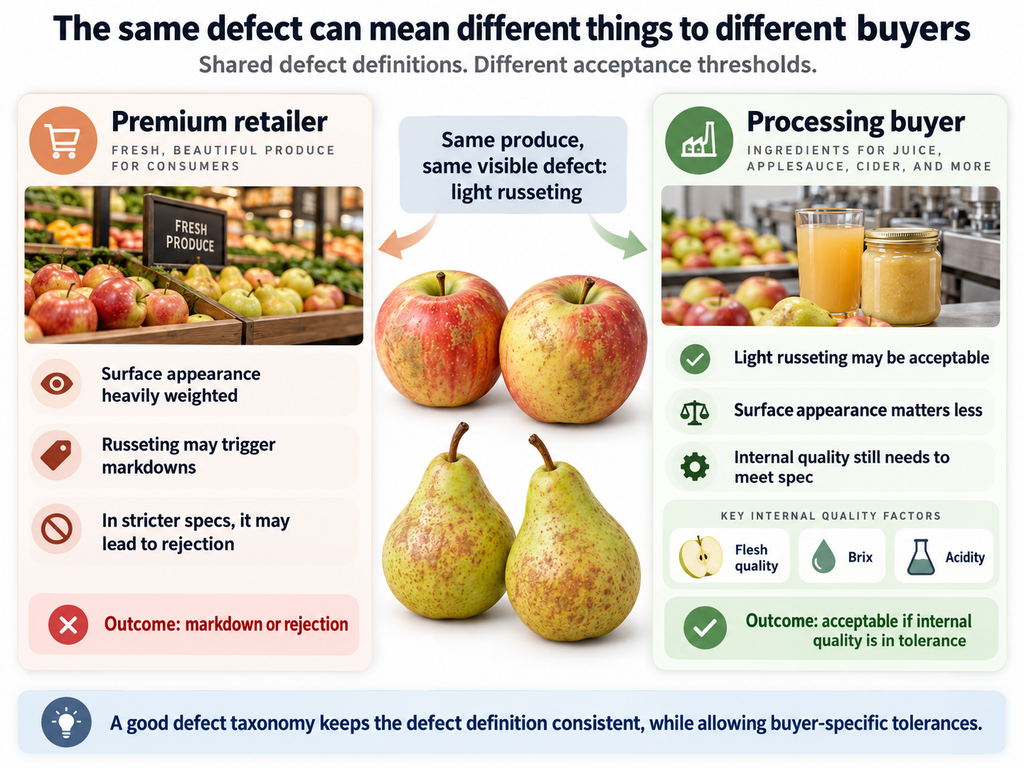
Without a shared, explicit taxonomy, inspectors have to improvise, which is how grading drifts.
The main categories of produce defects
An effective defect taxonomy needs to distinguish between the different types of defects that can affect fresh fruits and vegetables.
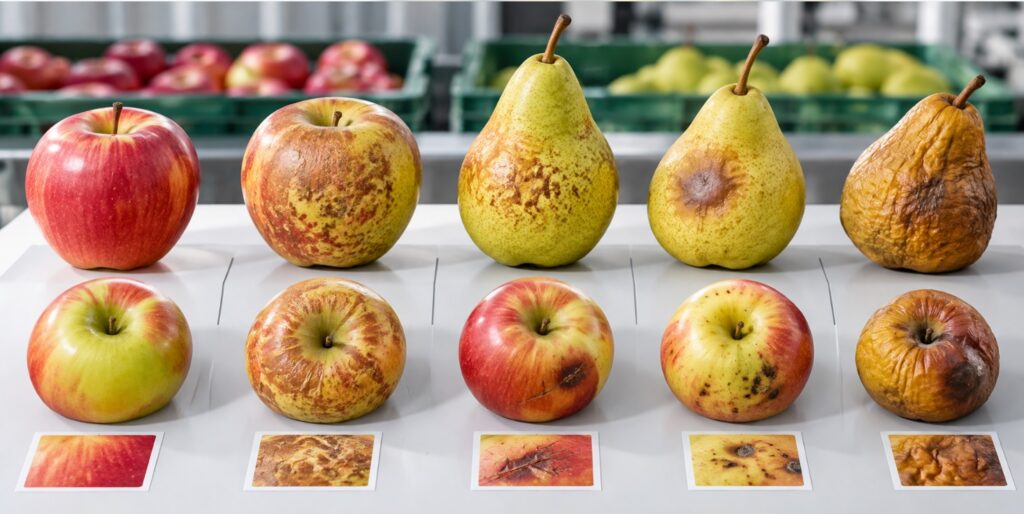
- Quality defects are inherent flaws. They include cosmetic or structural issues like non-standard shapes and scarring.
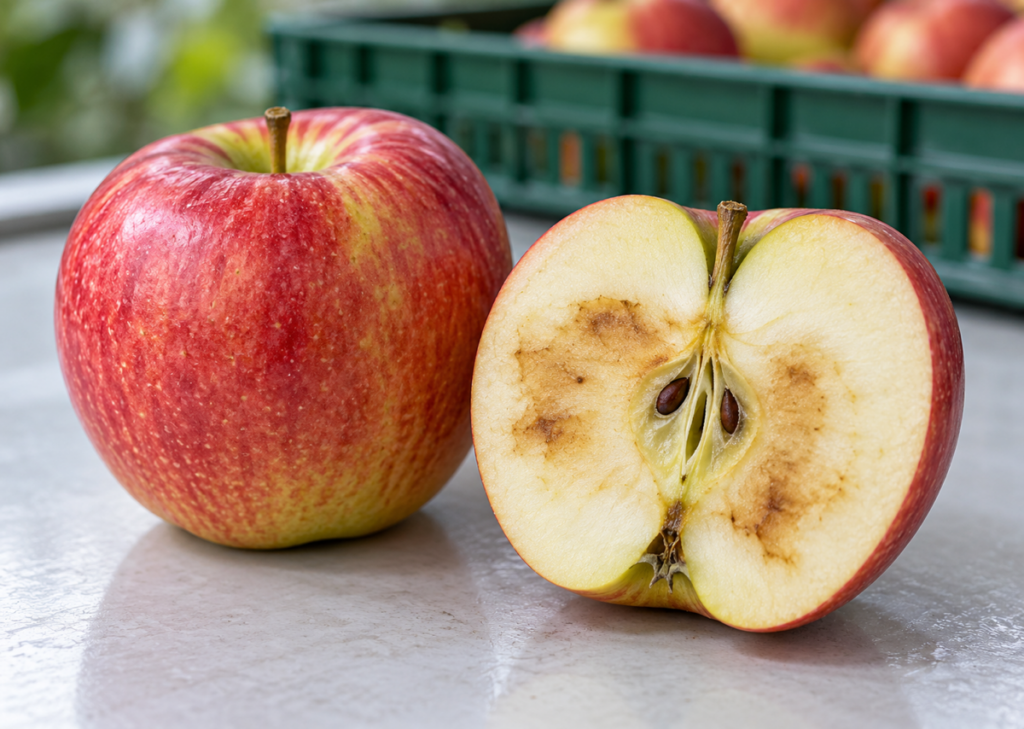
- Condition defects develop over time, after harvest. Decay, shrivel and bruising belong in this category.
This is not an academic distinction. If a premium retailer rejects a pallet for a quality defect (like russeting), it means they simply dislike the cosmetic grade. If they reject it for a condition defect (like shrivel), it usually means someone in the cold chain mishandled the temperature or held the fruit too long, making it a ticking clock of spoilage.
For both these categories, your quality control system needs to be able to categorize them by severity. At the very least, major/minor tiers should exist for each defect type, as well as each defect.
| Category | Examples | Typical handling |
|---|---|---|
| Quality defects | Shape, scarring, russeting, color | Graded against buyer tolerance |
| Condition defects | Bruising, decay, shrivel, dehydration | Time-sensitive, often reject/prioritize |
| Mechanical damage | Cuts, punctures, impact marks | Depends on severity |
| Internal defects | Internal browning, hollow heart | Sampled; may need instruments |
How to build a fresh produce defect taxonomy
- Inventory real defects per commodity: Gather historical inspection logs and speak with field teams to compile an exhaustive list of the specific anomalies that impact your unique produce categories.
- Define each explicitly, with reference images: Write precise, measurable descriptions for each defect and pair them with high-resolution photographs to eliminate visual ambiguity during inspections.
- Set severity tiers (major/minor): Classify each issue based on whether it is a cosmetic quality flaw or a progressive condition defect that compromises shelf life.
- Layer buyer-specific tolerances on shared definitions: Map individual customer specifications (such as a premium store’s zero-tolerance for scarring versus a processor’s flexibility) directly over your baseline rules.
- Train inspectors against the shared library: Conduct regular, hands-on calibration sessions using the unified reference material to ensure all quality team members score defects identically.
- Version and govern centrally: Maintain a single, locked digital master file for the taxonomy so that updates are instantly published to all supply chain partners simultaneously.
Keeping it consistent across buyers and sites
A defect taxonomy needs to mean the same thing at every inspection point. When sites develop their own labels or severity criteria, a difference in reported quality may reflect a difference in classification. Shared definitions give teams a reliable basis for comparing inspection results across locations (much more reliable than spreadsheets).
A shared library and clear responsibilities
Start with one shared library of commodity-specific defect definitions and reference images, then apply buyer-specific tolerances on top.
One customer may accept a higher proportion of minor scarring than another, while inspectors use the same definition and measurement method for both. The defect classification stays consistent while the acceptance threshold can change.
The library also needs clear ownership. Assign responsibility for approving changes, record when updates take effect and retire outdated versions. Periodically ask inspectors at different sites to assess the same samples against the same criteria. Any disagreements can help identify definitions or reference images that need clarification.
Standardizing defect grading with Clarifresh
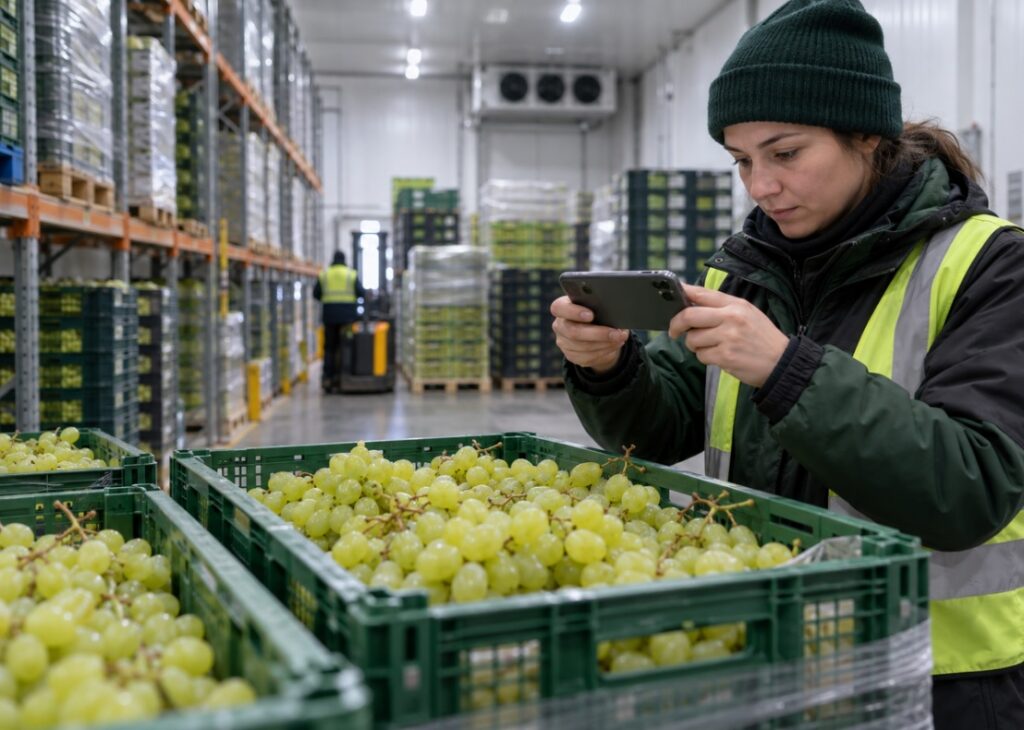
Clarifresh’s QC platform supports a shared quality language through configurable defect lists and inspection standards. Its self-service tools let administrators customize produce-specific defect groups and grading thresholds, with available customization depending on the account’s license. Inspection workflows can also require supporting photographs, helping teams document what they found alongside the recorded defect assessment.
Specifications can be shared with partner accounts and adopted in read-only form, helping preserve agreed criteria across organizations. This supports the principle behind standardizing fresh produce quality and building a governed quality specification: establish a common language for describing quality, then make each buyer’s acceptance rules explicit within the inspection process.
Book a demo to see how Clarifresh brings shared defect standards and buyer-specific tolerances into your inspections.
Frequently asked questions
What is a produce defect taxonomy?
It’s a structured, shared classification of produce defects that defines:
What counts as a defect
Defect severity levels
How each defect gets counted in the quality control system
A good taxonomy keeps grading consistent across inspectors, sites, and buyers instead of leaving it to individual judgment.What’s the difference between a quality defect and a condition defect?
Quality defects are inherent to the item: shape, scarring, color. Condition defects develop over time, such as bruising, decay, or shrivel. Condition defects are time-sensitive and often drive which product to move or reject first.
Why do buyers classify the same defect differently?
Because tolerance depends on the market. A premium retailer may reject light russeting that a processing buyer ignores entirely. That’s why a defect taxonomy standardizes the definitions but layers buyer-specific tolerances on top.