The Temperature Break You Didn’t See Is the Quality Failure Your Buyer Will
- Quality Control App
Cold chain failure is one of the most expensive problems in fresh produce logistics, and one of the least visible. Unlike a quality defect that shows up on inspection, or a supplier dispute that surfaces at delivery, temperature abuse in transit leaves no immediate trace. The produce looks fine, and it passes receiving. The problem announces itself days later, in a buyer’s DC, as a claim with no paper trail behind it.
Key takeaways:
- A temperature break in transit accelerates spoilage at the cellular level: the damage is real before it’s visible
- Standard visual inspection at receiving cannot detect cold chain failure; a load can look perfect and be days from rejection
- Cold chain damage manifests 24–96 hours after the temperature event, by which point the carrier has moved on and the documentation window has closed
- Border dwell time in 2025–2026 is adding unpredictable hours of cold chain exposure to supply chains that were already running on tight shelf-life margins
- The intervention point is receiving, not because the break happened there, but because it’s the only moment where context can still be captured
The four hours nobody recorded
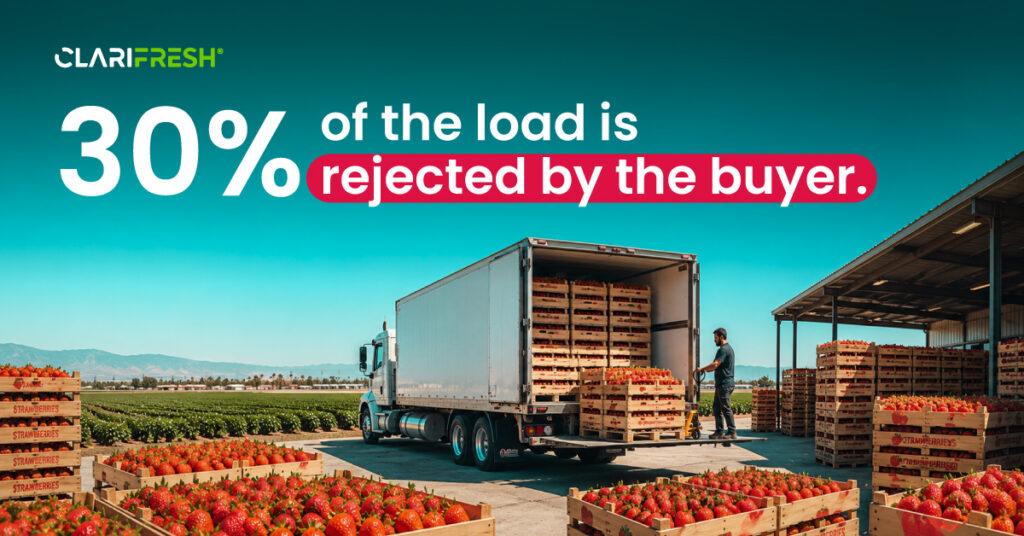
A shipment of strawberries arrives at a DC. The inspector checks colour, firmness, surface condition. Everything looks fine. It passes receiving and moves to storage. But two days later, 30% of the load is rejected by the buyer.
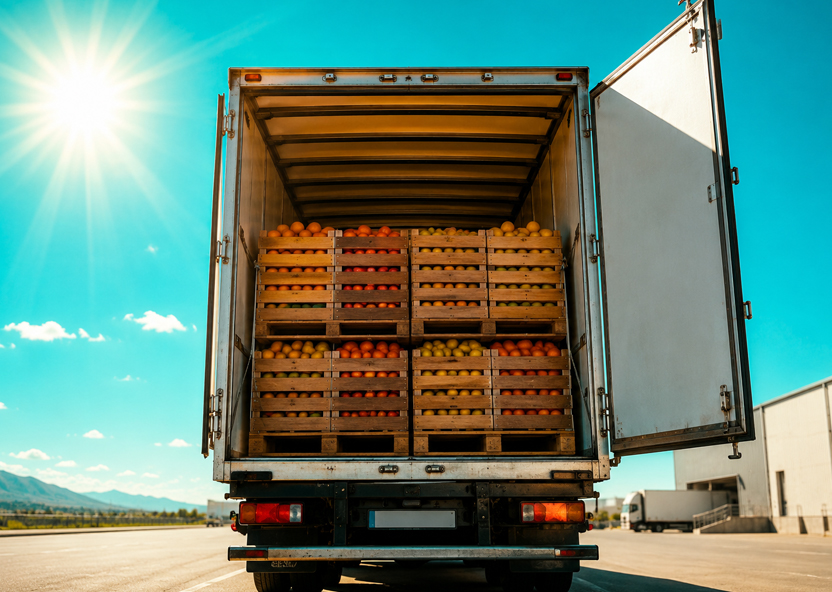
Nobody did anything wrong at receiving. The problem happened in a trailer park in Nogales at 2am, when a reefer unit cycled off for four hours. By the time the load arrived at the dock, the visible quality was unaffected. The shelf life was not.
This is the central problem with cold chain failure in fresh produce: the damage is invisible at the moment it matters most. It shows up later, as a dispute. And by then, there’s no record of what happened, and neither side has anything to work with.
The impact of temperature abuse on fresh produce
Fresh produce is a living system. After harvest, it continues to respire, consuming its own energy reserves as it slowly ages. Temperature is the primary lever that controls how fast that process runs. Keep produce cold, and respiration slows. Allow the temperature to rise, even briefly, and the process accelerates. That burns through shelf life that can’t be recovered when the cold chain resumes.
This is what makes temperature abuse so commercially damaging, and so difficult to manage. Even a short-duration event is additive: four hours at an elevated temperature in a strawberry load doesn’t just affect those four hours. It compresses the remaining shelf life of the entire lot. The produce that looked fine at receiving is now on a faster metabolic clock than anyone at the DC knows.
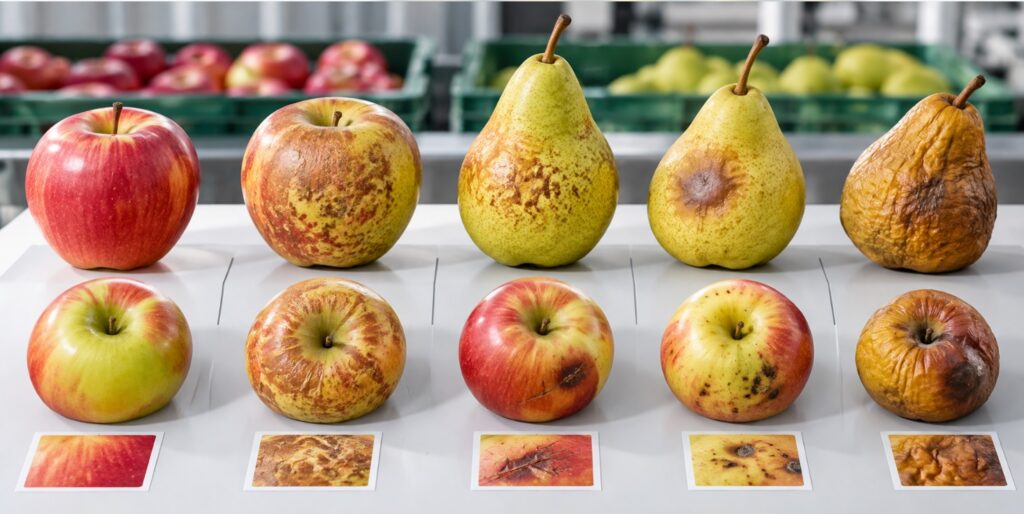
What makes it worse is the lag. Browning, softening, and microbial growth (the visible signals of quality failure) don’t manifest immediately. Depending on the produce type, they appear 24 to 96 hours after the temperature event. Firmer produce like apples and citrus can mask the damage even longer, widening the window between the invisible failure and the visible one.
Why can’t visual inspection catch it?
Standard receiving inspection is built around what can be seen: colour, firmness, surface defects, packaging condition. These are meaningful quality signals under normal circumstances. For cold chain damage, they are the wrong instrument.
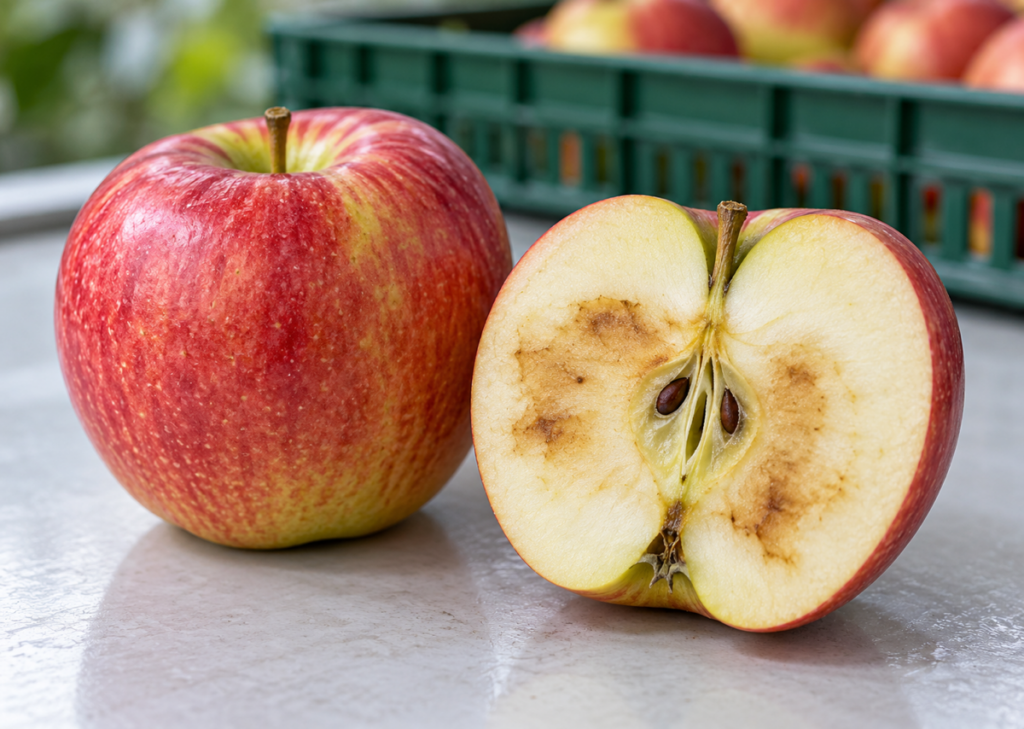
Temperature abuse operates at the cellular level. It changes the metabolic trajectory of the produce long before its appearance. Firmness holds. So does color, and all the other indicators of surface condition. What has changed is the rate at which the fruit is aging, which is not visible at inspection.
Where the breaks happen
Cold chain failure isn’t a single event. It’s a cumulative exposure across multiple handoff points, any one of which can initiate damage that compounds through the rest of the journey.
The most common risk points are:
- Pre-cooling delay at origin, where produce is loaded warm because cooling time was cut to meet a schedule
- Dock-to-truck transfer, a brief exposure that compounds with poor pre-cooling
- Transit temperature cycling from reefer units switching off and on during driver rest stops or unplanned delays
- Receiving dock exposure, where produce waits for intake inspection in variable ambient conditions
In 2026, there is an additional risk point that didn’t exist at the same scale two years ago: border dwell time. Tariff-related inspections and trade policy disruption along the US-Mexico corridor are adding unpredictable hours of uncontrolled dwell time to supply chains. According to a cold chain survey of 1,000 supply chain decision-makers, 73% expect tariffs to continue negatively affecting their operations in 2026. For a strawberry supply chain already running on a five-day shelf life, additional unplanned dwell time is a margin threat.
Modern QC mitigates the impact of cold chain failures
The cold chain problem can’t be fully solved at receiving, because the break has already happened by the time the load arrives. What can be built is a receiving process that captures more than a visual snapshot, and a post-intake workflow that catches the damage before it becomes a buyer claim.
Three practices make a material difference:
1. Note cold chain context at intake
Packaging seal condition, pallet positioning: was it a mixed-load? Was it positioned away from the reefer wall? In addition, any visible signs of condensation or moisture are all cold chain indicators that a standard visual inspection doesn’t capture but a more structured intake record can.
2. Build in a post-intake quality check at 24–48 hours
This is the window in which cold chain damage becomes visible. A second condition assessment at this point, tied to the original intake record, creates the before-and-after documentation that makes a dispute resolvable. Without it, the claim arrives with no baseline to dispute it against. This is only achievable with automated, standardized inspection methodologies in place.
3. Track cold chain performance by supplier, carrier, and season
Problems cluster:
- A carrier with a history of temperature excursions
- That supplier whose pre-cooling discipline is inconsistent
- A particular border crossing that adds exposure
These patterns are only visible if the data is being captured and retained. Supplier scorecards that include cold chain quality failures over time are a different and more useful instrument than per-load visual reports.
Clarifresh’s intake inspection workflow captures condition at receipt and links it to supplier and lot data. The post-intake check is a natural extension of that workflow. It creatse the before-and-after record that makes cold chain disputes resolvable rather than a matter of whoever argues more convincingly.
If cold chain failure is showing up in your claims, talk to Clarifresh about what your intake inspection is and isn’t capturing.
Frequently Asked Questions
We ask our suppliers for reefer logs. Isn’t that sufficient cold chain documentation?
Supplier reefer logs cover the primary transport leg, but cold chain failure can happen at origin, at border dwell, at a DC transfer, or on the final delivery leg. Logs from one carrier don’t capture the full picture, and they’re provided by the same party who may be subject to a claim.
Our produce looks fine at receiving. Isn’t that a reasonable pass standard?
Visual quality at receiving reflects the state of the produce at that moment, not its trajectory. A load that looks fine today and has experienced a temperature event may look very different in 48 hours. Receiving inspection should capture more than the snapshot.
How do we prove a cold chain break happened if we didn’t witness it?
The burden of proof is impossible without pre-emptive documentation. What you can capture is pulp temperature at intake, packaging condition indicators, and a post-intake quality reassessment. Those together create a circumstantial record even without direct cold chain data.
Isn’t this mostly a carrier or logistics problem, not a QC problem?