Retail Private Label Produce Quality Starts at the Dock, Not the Shelf
- Quality Control App
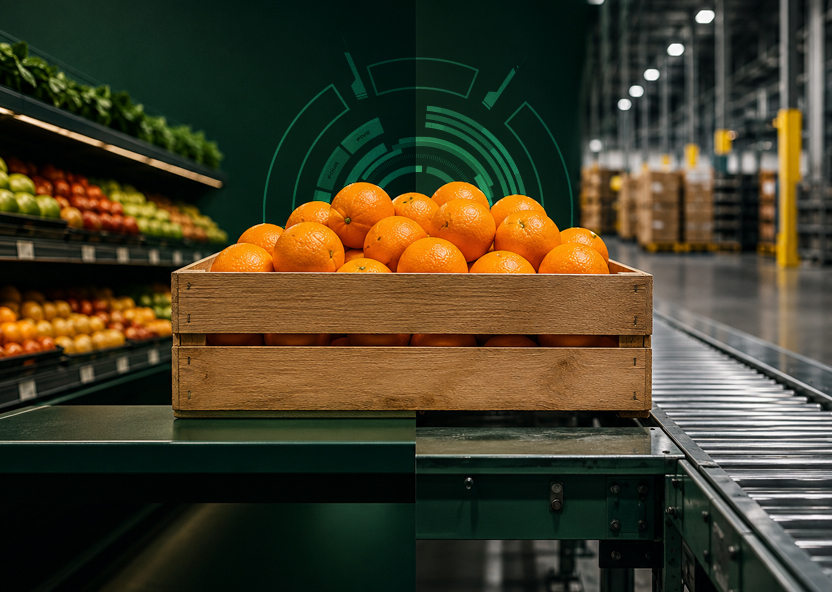
Your store brand is only as good as what came off the truck
When a retailer puts their label on fresh produce, every quality failure becomes a brand event. That is why retail private label produce quality needs to be managed before products reach the shelf, starting with what comes off the truck. Here’s why private label demands a fundamentally different approach to QC.
The label changes everything
A shopper picks up a bag of salad leaves. It’s her supermarket’s own brand, the private label line that sits alongside the Dole and Fresh Express bags. She finds it limp on day two. She doesn’t think ‘bad supplier.’ She thinks ‘bad Whole Foods’ or ‘bad Kroger.’ She doesn’t go back to own-brand salad for six months.
Private label produce (also known as own-brand, store brand, or retailer-label) is fresh produce grown and packed by a supplier but sold under the retailer’s name rather than a national brand. The Kroger bag of salad leaves and the Fresh Express bag next to it on the shelf may have come from the same farm, the same packing line. But they have a different label.
In contrast, with a branded product, a quality failure is a shared problem. The supplier’s name is on the packaging, so their reputation takes part of the hit. But private label, there’s no one else on the label. The retailer owns the brand promise, and owns the consequences when it breaks.

Key takeaways:
- A private label quality failure is a retailer brand event, not a supplier dispute
- Own-brand produce is sourced from the same farms as branded: the label is the only difference, but it changes the accountability structure entirely
- Standard intake inspection, designed for branded supply chains, is the wrong tool for own-brand
- Retailers who treat private label QC as a distinct category with its own standards, data ownership, and supplier accountability, can protect both their margins and their brand
Private label fresh produce carries risk
For most of its history, private label produce was a margin play. Suppliers delivered acceptable quality at a lower shelf price, quietly profitable and rarely the focus of serious brand investment. Retailers carried the range because it worked economically, not because they had ambitions to build something shoppers would actively choose.
That has changed. Fresh perimeter categories (produce, dairy, deli) now account for 28% of all private label unit sales in the US, the highest share of any segment. Overall, private label’s share of all CPG unit sales has grown from 22.1% in 2021 to 23.9% by end of 2025, meaning nearly one in four products sold across US retail is now a store brand. A perception shift is driving this as much as price: two-thirds of Gen Z and millennial consumers now rate own-brand products on par with national brands for quality — a significant reversal from a generation ago, when store brands were widely seen as the inferior option.
Retailers have responded with investment: new SKUs, premium packaging, range expansion, and in some cases dedicated brand identities for their produce lines. The own-brand produce programme has moved from a margin lever to a strategic asset.
As retailers invest more in own-brand fresh produce, retail private label produce quality becomes a direct measure of brand trust.
All of this makes what happens at the loading dock considerably more important than it used to be.
Standard QC is the wrong tool for own-brand fresh produce
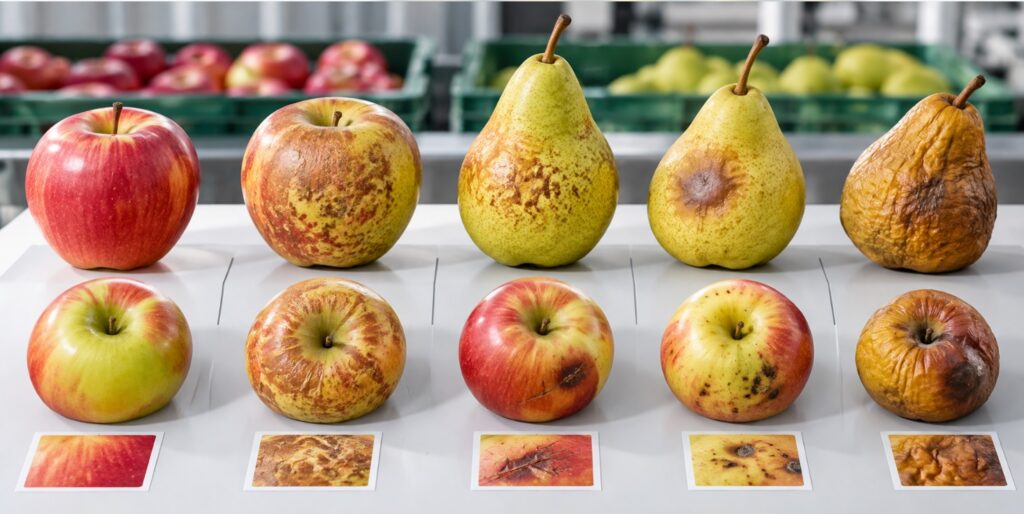
Most retailers apply the same intake inspection process to private label produce as they do to branded. But retail private label produce quality requires a different standard because the retailer’s name is the brand promise. This is a category error, because while the produce may be the same, the risk profile is different.
| QC Question | Branded Produce | Private Label Produce |
| Who owns the quality failure? | The brand: retailer can distance itself | The retailer: no distance possible |
| What does a shelf failure cost? | Lost basket for that brand | Lost trust in the store’s own-brand programme |
| What does a recall cost? | Brand reputation damage | Retailer reputation damage + programme setback |
| What do consumers see when it fails? | “That brand is bad today” | “This store’s food is bad” |
| What does consistent quality build? | Brand loyalty (to the supplier) | Store loyalty (to the retailer, far more valuable) |
| Who owns the inspection data? | Supplier or shared | Must be owned and retained by the retailer |
The core issue is accountability. With branded produce, quality failure is a shared problem: the supplier’s name is on the label, and they have their own brand equity to protect. With private label, that shared incentive is gone.
The supplier relationship problem
In some cases private label produce may be sourced from the same suppliers as branded. That could be the same farm, or even the same packing line. The difference is the label. This creates a structural problem that’s easy to overlook.
A branded produce supplier has their own name in the market. Quality failures damage their own commercial relationships, not just the retailer’s. That’s a powerful and largely self-managing incentive.
But a private label supplier doesn’t have that skin in the game. When the product fails on shelf, the retailer’s brand takes the hit. This doesn’t mean private label suppliers cut corners; most don’t. But it does mean the accountability structure is different. The retailer who assumes a private label supplier has the same quality motivation as a branded partner is carrying a risk they don’t need to carry.
The practical consequence: retailers need to own the accountability framework for private label produce. Without that ownership, retail private label produce quality becomes dependent on supplier processes that may not fully reflect the retailer’s brand standards. It’s not something they can afford to delegate.
Modern quality control reduces brand risk from private label fresh produce
Four things differentiate a private label QC programme from a standard receiving operation: A strong retail private label produce quality programme gives retailers independent visibility into incoming product condition, supplier performance, and cross-site consistency.
1. Private label produce gets its own inspection criteria
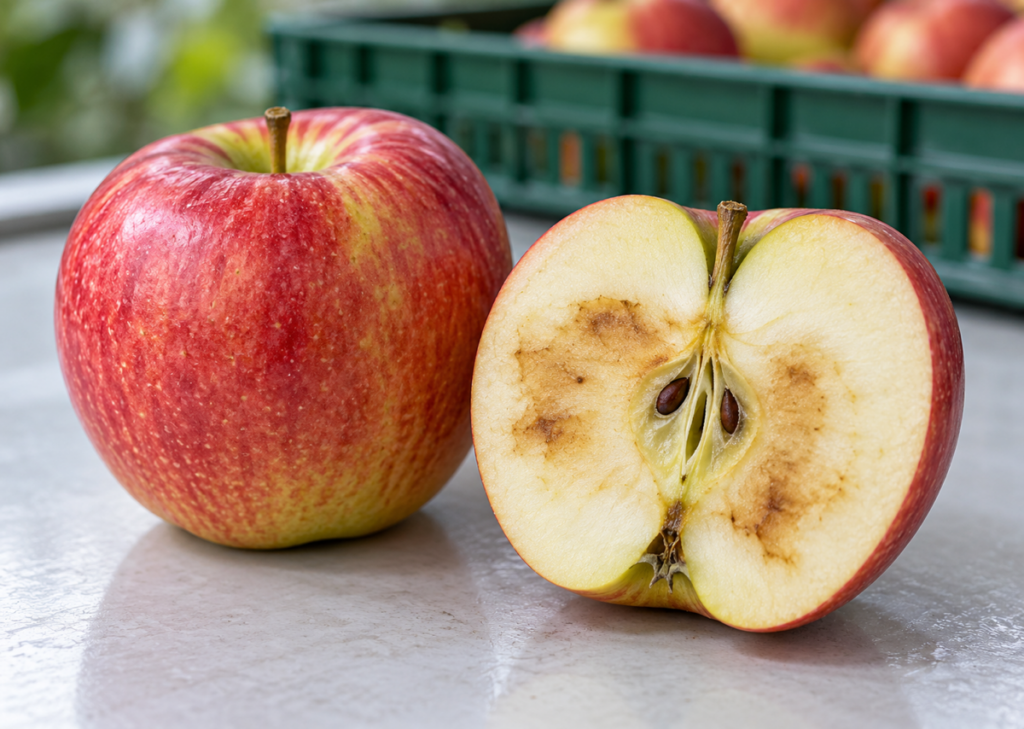
Tolerance levels, defect categories, and grade thresholds should reflect what the retailer is willing to put their name on, not a category average. The starting point is building internal specs for each own-brand line, based on consumer-visible attributes and shelf-life expectations.
2. Retailers win by owning their Intake data
If a quality dispute arises, supplier-generated reports are useful but not sufficient. The retailer needs independent records, captured at intake, under their own process. That way, they don’t need to rely on data produced by the party being disputed with.
3. Supplier scorecards enable better decisions
Switching private label suppliers is a longer, more disruptive process than switching branded suppliers. Catching performance drift early protects the programme before problems become visible on the shelf. A scorecard built on retailer-owned data is worth considerably more than one built on supplier-reported metrics.
4. Cross-site consistency supports the brand promise
An own-brand salad may be fresh at one store and limp in another. This kind of quality gap between two stores in the same retailer’s network undermines the brand promise the entire programme is built on. Cross-site visibility into inspection outcomes is what makes that gap visible before shoppers find it first.
The investment in own-brand deserves a QC programme to match
Private label produce has stopped being a side category and become a strategic pillar for grocery retailers. The investment in packaging, branding, and range expansion is substantial, but the QC infrastructure to protect that investment is seldom proportionate to it.
The way forward for retailers is to treat private label produce as a distinct accountability category. This is the foundation of stronger retail private label produce quality, where standards, data, and supplier performance are aligned with the retailer’s brand promise. That category comes with its own standards, its own data, and its own supplier performance framework.
If you’re scaling a private label produce programme, talk to Clarifresh about building a QC infrastructure that protects retail private label produce quality from intake to shelf.
Frequently Asked Questions
We source private label and branded from the same farms. Why does QC need to be different?
Because when the branded product fails, the supplier’s name is on the label. When your private label product fails, your name is on the label. The inspection standard needs to reflect that.
Our suppliers handle their own QC and share reports with us. Isn’t that enough?
Supplier-generated reports are useful context but not sufficient for own-brand. If a quality dispute arises, you’re relying on data produced by the party you’re disputing with. Retailer-owned inspection records, captured independently at intake, are the only ones that give you an unimpeachable position.
Our private label range is small. Is this level of QC investment justified?
The ROI calculation changes when the label is yours. A single high-profile quality failure in an own-brand line can suppress repeat purchase across the entire programme, not just the affected SKU. The cost of consistent intake inspection is fractional compared to that downside.
How do we define quality standards for our own-brand that are different from market norms?
Start with what you’re willing to put your name on. The practical answer is building internal specs for each own-brand line based on consumer-visible defects and shelf-life expectations.