A New Appetite for Quality Tech: Fruit Attraction and the Global Show
- Quality Control App
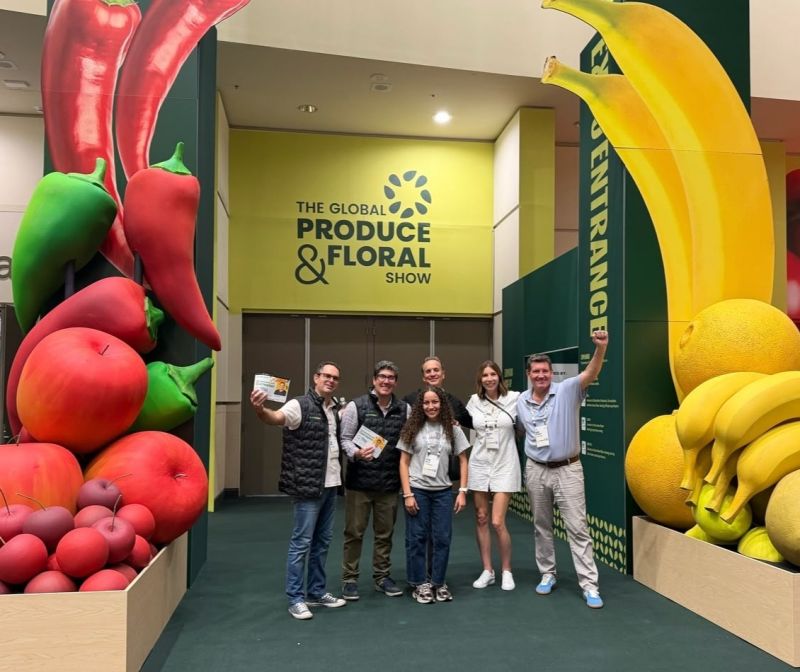
In October, the Clarifresh team spent time at two of the produce industry’s biggest events: Fruit Attraction in Madrid and IFPA’s Global Show. This article covers what we heard from growers, packers, shippers and receivers along the way.
Longer shipping routes and the coming El Niño were on a lot of people’s minds. Many of the companies we spoke with were thinking about how to protect shelf life this season, and how to know the condition of their produce at every handover.
Logistics has turned quality into a risk problem
The longer produce spends in transit, the more can go wrong. This season, several pressures are stacking up:
- Longer routes: Most carriers are now sailing around the Cape of Good Hope instead of through Suez, which adds 10 to 14 days to Asia-Europe voyages.
- Tight reefer capacity: Refrigerated capacity was already constrained in 2026, and the longer sailings push lead times out further.
- El Niño is expected to have a major impact on South American growing regions from late Q3 2026 into early 2027. Those regions supply much of North America’s counter-seasonal fruit.
At Fruit Attraction, we heard how this plays out on the ground. Fruit that leaves its origin in good condition arrives with less shelf life and more variability, and the loss falls on whichever party can’t show what state it was in at handover. Knowing the quality and handling history of every shipment is now as critical as the cold chain itself.
And that is increasingly being seen as a technology problem.
The market is ready for new technology
The shift was strongest in the Spanish market. Conversations that in past years ended at the stand went further this time, with specific operations and timelines on the table. Some of the companies we spoke with were ones we had first met seasons ago, now returning to the topic with clearer needs.
“A few years ago people in Madrid would smile, take a brochure and walk off. This year the same companies sat down and asked when we can start. Nobody wants to find out about a quality problem after the truck has already left.”
Elad Mardix, CEO, Clarifresh
Consistency comes from standardizing and automating inspection
If quality is the one thing you can still control, the next question is how to control it across every site and supplier you work with. We see two ways to do it, and they work best together.
The first is standardization
When each pack house, distribution center or origin team inspects its own reading of the spec, results can’t be compared and disputes are hard to settle. One inspection process, applied the same way everywhere, gives trading partners data they can rely on wherever the fruit was grown or checked.
The second is automation
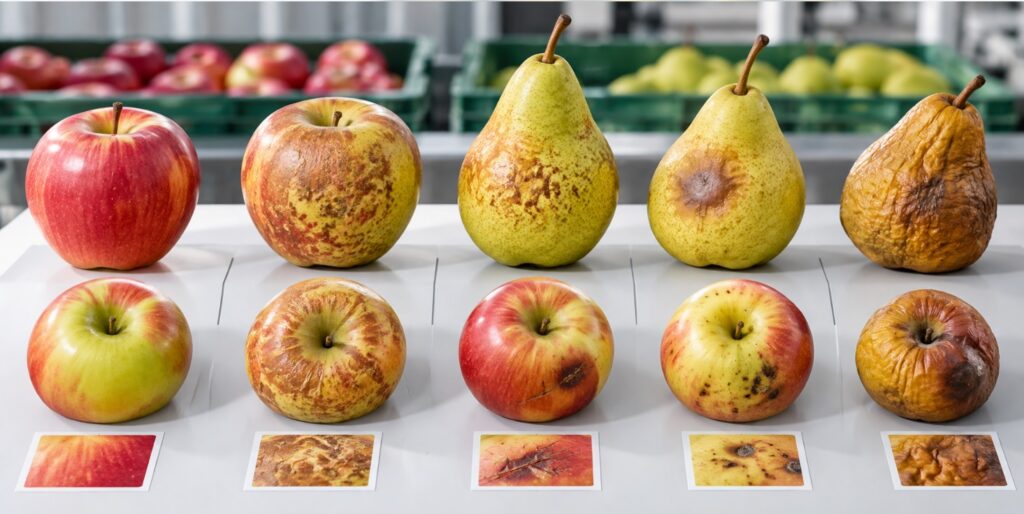
Even with a shared process, two inspectors can look at the same carton and reach different conclusions. Computer vision removes that variation by measuring defects and color objectively, so the result reflects the fruit and not the person grading it.
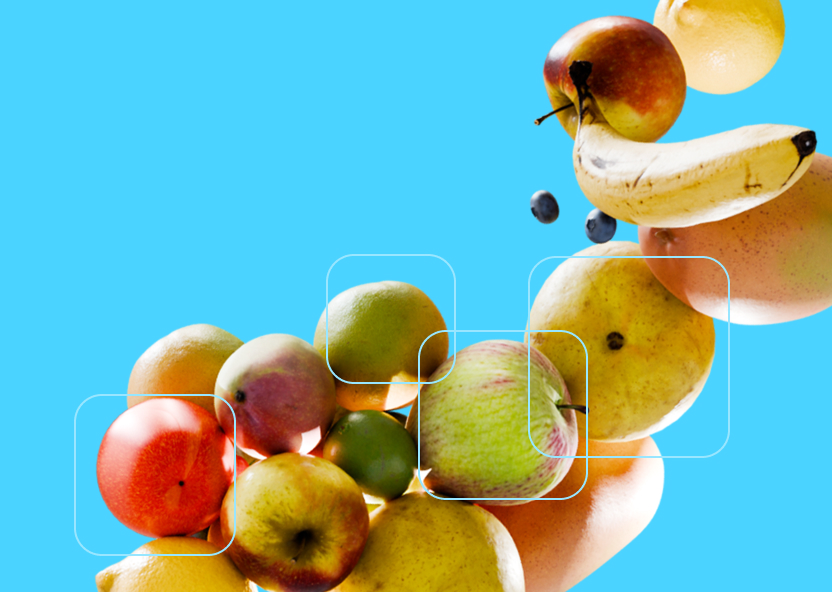
At origin, accurate defect identification is the variable that matters most for production and export decisions. Some produce software platforms now include basic QC modules, but a digital checklist still depends on the inspector’s eye. Computer vision is what makes defect detection consistent.
Large language models bring speed to both
New capabilities that once took months to build can now be added to the QC process quickly. Inspectors can count berries in a clamshell or verify a label from a single photo in the mobile app, and supply admin details are captured from that same image without manual entry.
At the base of all of this is the fact that more companies want to run their own quality programs. Many are moving away from third-party inspection services, with cost and control as the main reasons, and adopting technology to effectively bring QC in-house where they can control it.
QC data is becoming shared between trading partners
The Global Show leans toward the destination end of the chain, and the conversations reflected it. Receivers want quality data that is centralized and available the moment it’s created, because that data now underpins what the product is worth and when ownership changes hands. Faster agreement on those points keeps produce moving and leaves more shelf life for the consumer.
Momentum is also growing for sharing data upstream. Broadliners, retailers and grower-packer-shippers all want early visibility of what’s heading their way, since every hour saved getting fruit into the cooler or its slot protects shelf life.
Building for six months from now
The season ahead won’t be calmer for anyone. In Europe, disruption has pushed companies that once hesitated to take quality technology seriously. In North America, buyers and suppliers are already asking how quickly they can share inspection results. In both markets, consistent and trusted quality data is becoming something trading partners build their relationships on.
At Clarifresh, we design for where the industry will be in six months as well as what it needs today. Our roadmap is shaped with input from a customer user group, so the people running inspections every day help decide what comes next. Each quarter we release new technology along with updates to configuration and reporting, so customers can adapt their programs as conditions shift.
If we met at Fruit Attraction or the Global Show, we’d love to pick up the conversation. If we didn’t, book a demo and we’ll show you Clarifresh working on your own produce.