Labour Shortages Don’t Just Raise Costs, They Lower Quality
- Quality Control App
Picture harvest week. Two thirds of the crew didn’t show up. The manager has 48 hours before a load needs to leave for the DC. The decision sitting in front of him: pick selectively to spec and send 60% of what was promised? Pick everything and sort at the facility? Or send what’s there and hope the buyer doesn’t look too hard?
Most coverage of farm labour shortages focuses on the first consequence: less produce, higher prices. This article is about the third: variable quality from a farm under harvest pressure is a quality problem that flows downstream to every buyer in the chain. It arrives at the packing facility without a label explaining where it came from.
Labor shortages and fresh produce: A structural problem for the fresh produce industry
US agriculture is facing a structural labour shortage, not a temporary one. According to research commissioned by the International Fresh Produce Association (IFPA), farmers reported being unable to hire 21% of the labour they needed for normal operating conditions. Modelling from the same report suggests that a shortage at that level could reduce domestic fruit and vegetable production by 9%, and revenue by 11%.
Approximately 40% of crop farmworkers lack legal authorisation to work in the US, based on USDA survey data. The labour pool that US fresh produce farming depends on is structurally exposed to enforcement shifts in ways that are difficult to plan around.
How a labor shortage can degrade quality at source
Under normal harvest staffing, the quality discipline on a well-run farm is methodical:
- Selective picking at optimal maturity
- Field or packhouse grading to spec
- Culling of rejected produce before dispatch
- Consistent lot quality with low variance.
The load that leaves for the DC reflects deliberate decisions made by people with time to make them.
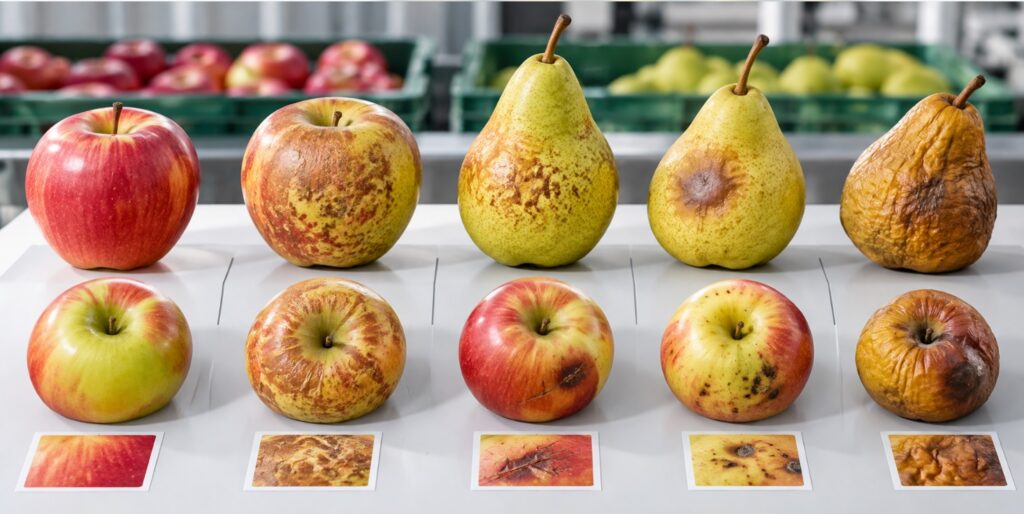
Under labour-constrained harvest, that discipline compresses. Everything gets picked to meet the volume commitment. Grading becomes less rigorous because there aren’t enough hands to do it properly. Marginal fruit gets included to hit tonnage. This leads to higher variance within each lot, more rejects at the buyer end, and dispatch that is either delayed or rushed to compensate.
The downstream consequences for packers and buyers
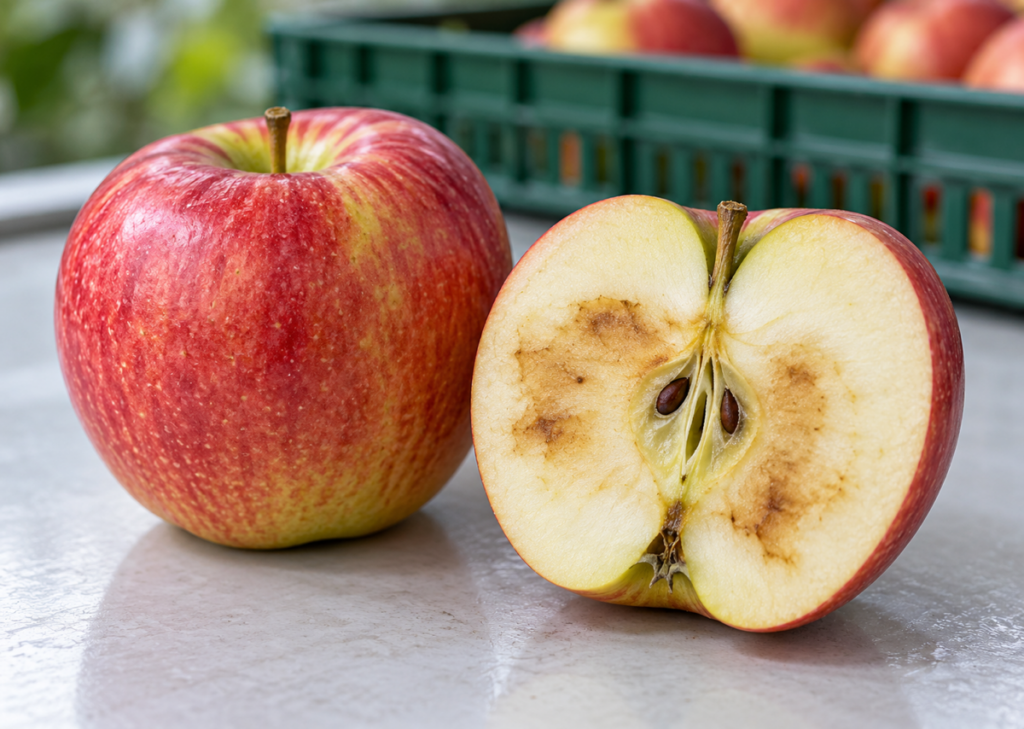
The packer receiving that load doesn’t know whether the farm had a full crew or a third of one. All they see is the incoming quality as it is. If the lot has high variance, with some fruit at spec and some marginal, the line slows. The number-two volume inflates, and premium-grade product ends up in the wrong packaging.
The buyer who placed an order with a grower they’ve worked with for years doesn’t know that this season’s shipment is more variable than last year’s. The first indication is a rejection at their DC, or a margin hit from higher-than-expected shrink.
This is the core problem with how labour shortages travel through the supply chain: they are invisible at the point of delivery.
Real-time quality data is the only way to deal with this
A grower who has documented what was dispatched, and under what conditions, is the one who can have an honest conversation with a buyer when quality varies. Without that record, variance looks like inconsistency. Inconsistency looks like unreliability. And unreliability ends supplier relationships that took years to build.
2026 is making this conversation harder to ignore
The labour environment this season is acutely difficult in ways that go beyond the structural baseline. Immigration enforcement activity in 2025–2026 has reduced informal agricultural labour supply at farms that previously relied on undocumented workers.
The point here is not political but operational: the labour environment in 2026 is creating quality variability at harvest that buyers need to understand and growers need to manage.
Automated quality control: 3 key benefits for growers under pressure
Clarifresh gives fresh produce growers three things that protect their business when conditions are difficult:
1. Objective quality assessment regardless of crew size
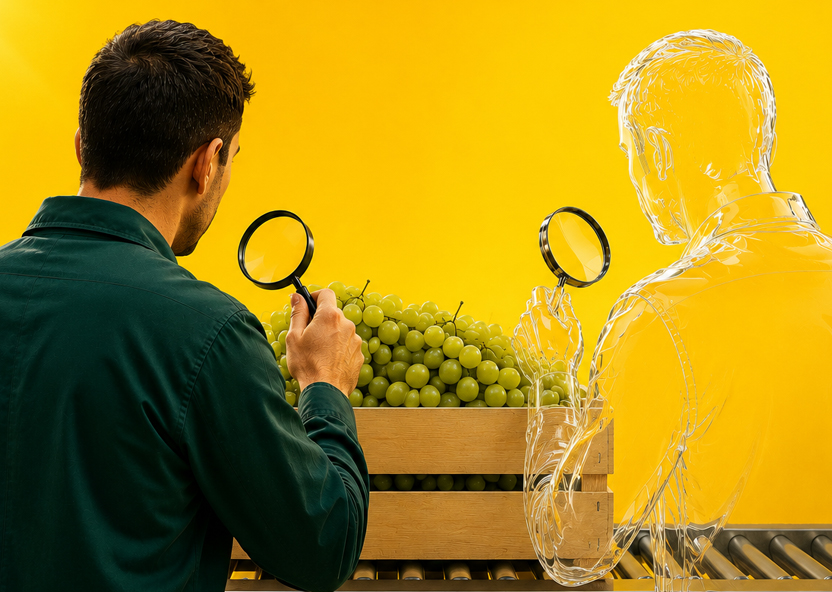
When you’re operating with a depleted team, inspection quality is the first thing that suffers, because it depends on experienced eyes and available time. Both of these are in short supply. Clarifresh replaces subjective, variable human assessment with AI-driven inspection that produces consistent, standardized data regardless of who’s doing it or how pressured the day is. Using the Clarifresh app, every inspector produces a uniformly reliable record of what actually left your farm.
2. Dispute protection when quality varies
Harvest pressure may mean some marginal fruit makes it into a lot. The worst outcome is finding out via a rejection with no basis for a conversation. A timestamped, AI-verified dispatch inspection report (shared with the buyer before the truck arrives) means both sides are working from the same baseline. You can have an honest conversation about what was sent and why, rather than absorbing a chargeback with no recourse.
3. Smart routing to protect revenue
Knowing grade distribution at dispatch lets you make an intelligent decision about where product goes:
- Marginal fruit to a buyer whose spec it meets
- Premium fruit to the buyer who pays for it
Under harvest pressure, that routing decision is the difference between protecting your margin and sending everything down the same channel and absorbing the shrink when it doesn’t clear.
Data discipline protects relationships
The labour crisis in US agriculture is not going to resolve quickly. The structural forces are all moving in the same direction. What growers can control is how they communicate quality in a difficult environment.
Documentation doesn’t solve a harvest staffing problem. But it gives the grower a way to manage the quality consequences of that problem:
- To tell the buyer what arrived,
- what condition it was in,
- and what the context was.
Building that data discipline now, in a difficult season, is a strategic move with long-term benefits. Growers with this kind of infrastructure will emerge from this period with intact buyer relationships and a data record that speaks for them when the market normalises.
If you’re a grower managing harvest quality under labour pressure, see how Clarifresh works for dispatch inspection.
Frequently Asked Questions
My buyers understand that labour is a problem for everyone. Why do I need to document anything extra?
Understanding the problem is different from accepting the consequence. A buyer who sympathises with the labour shortage is still going to reject a load that doesn’t meet spec, or charge back for elevated shrink. Documentation gives you the basis for a conversation about what happened, which is a more productive interaction than an invoice dispute with no context.
If I document that I had reduced staffing on harvest day, doesn’t that undermine my position with the buyer?
The opposite. A grower who proactively discloses conditions and still delivers a documented quality assessment is demonstrating accountability. The buyer who finds out about the staffing problem via a rejection has reason to question whether they can rely on you. Transparency before the fact is a different signal than silence before a problem.
We use paper grading records at dispatch. Is that sufficient?
Paper records exist, but they don’t travel with the load and they can’t be shared with a buyer before arrival. The value of dispatch inspection records is in their accessibility. The buyer can see the condition before the truck arrives, and both sides are working from the same baseline when quality is flagged.
Is this relevant if I only supply domestically and don’t export?
Yes. The labour shortage is not a US export issue, it’s a US harvest issue. Any grower feeding a packing facility or DC is in this situation, and the quality accountability argument applies regardless of whether the produce crosses a border.