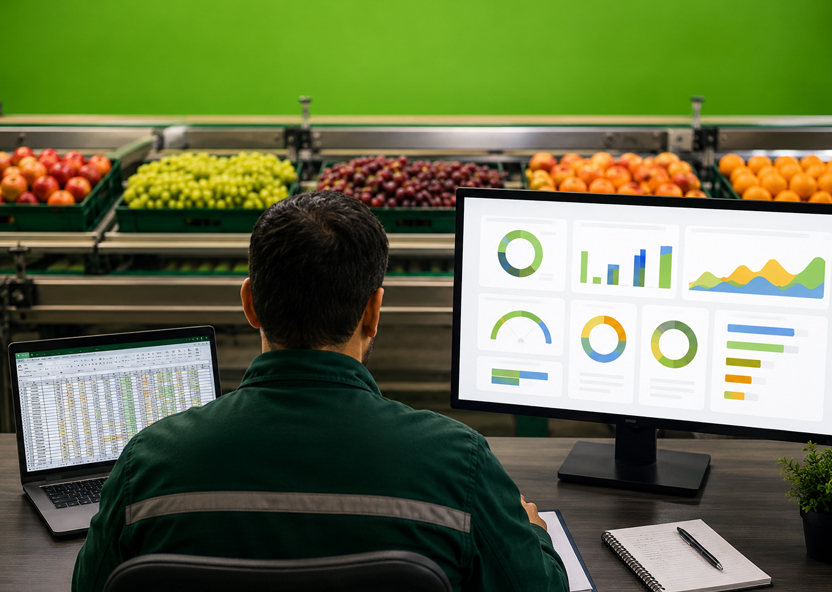
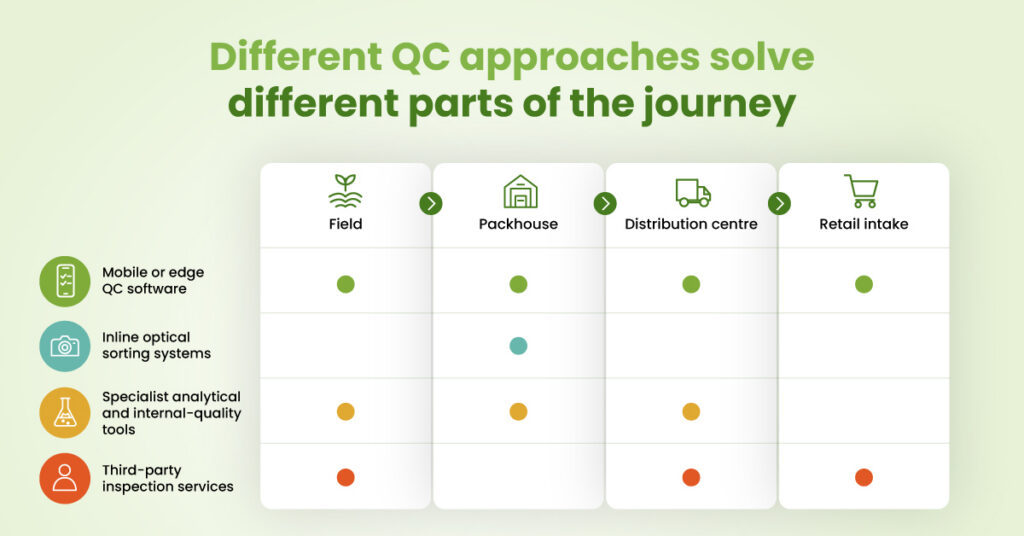
Produce QC is rarely a single-system decision. Mobile QC software, inline sorters, specialist analytical tools and third-party inspection services each solve different problems at different points in the supply chain.
The right approach depends on where you inspect, what you need to measure and how the results will be used. For many operations, the best fit is a combination.
What are the main approaches to produce quality control?
Produce quality control is not a single category of technology. Different approaches inspect different attributes, operate at different points in the supply chain and support different decisions.
Four common approaches are:
Mobile or edge QC software
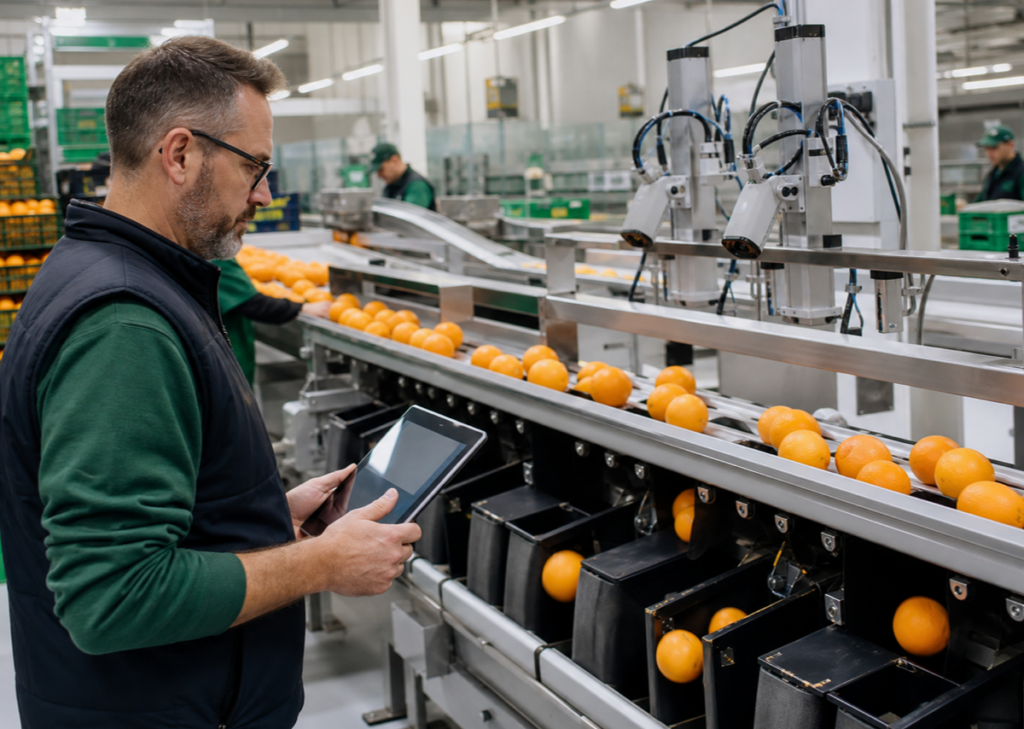
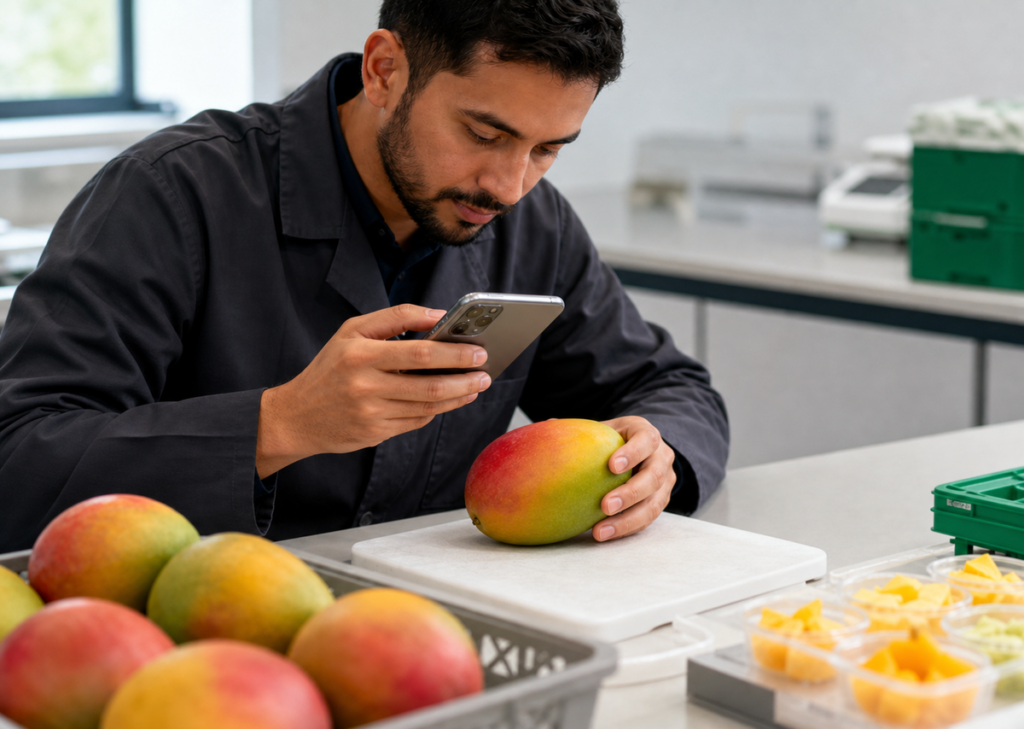
Mobile QC software supports inspections in the field, packhouse, distribution centre or at intake. Inspectors use a phone or tablet to record defects, measurements, photos and grades against defined quality specifications.
This approach is particularly useful for businesses managing multiple sites, produce categories or buyer requirements. It creates a shared inspection process and keeps quality records available for reporting, comparison and decision-making.
Mobile QC software is generally used for sample-based inspections. It does not physically sort every item moving through a packing line.
Inline optical sorting systems
Inline optical sorters inspect produce as it moves through a packing line. Cameras, sensors and automated grading rules assess visible characteristics such as size, colour, shape and external defects. The system can then route or remove individual items according to the selected grade.
These systems are well suited to high-volume operations where rapid, item-level grading and physical separation are required. They are fixed to the packing environment and typically require capital investment, calibration and line integration.
Specialist analytical and internal-quality tools
Some quality attributes cannot be assessed reliably through an ordinary visual inspection. Laboratory equipment, handheld instruments, near-infrared sensors and hyperspectral imaging can help evaluate internal or compositional characteristics such as dry matter, sugar content, firmness, ripeness or internal defects.
These tools are valuable when a business needs deeper product analysis or commodity-specific measurements. Their use may require specialist equipment, technical expertise and additional processing time. Some are used in laboratories or sampling programmes, while others can integrate into automated lines.
Third-party produce inspection services
Third-party inspection services provide an independent assessment of a shipment, lot or supplier. They may assist with destination inspections, dispute resolution, import and export checks or periodic verification.
This approach is useful when independence matters or when a business does not have inspection capacity in a particular location. It does not replace a continuous in-house quality system, and the resulting data may not be available quickly enough to guide day-to-day operational decisions.
| Solution type | Best fit / use case | Trade-offs |
|---|---|---|
| Mobile/edge QC software | Field, packhouse, DC, and intake inspections; spec-driven grading; multi-buyer standardization; portable, works across sites | Not a high-speed physical sorter; relies on sampling and good capture practice |
| Inline optical sorters | High-volume, in-line physical sorting on the packing line | Capital hardware, line-fixed; not a multi-buyer spec/governance layer |
| Lab / hyperspectral tools | Deep internal-quality analysis (e.g. dry matter, specialized attributes) | Slower, specialized, not a whole-chain workflow |
| Inspection / audit services | Outsourced third-party inspections, audits, certification | Not a real-time, in-house data and governance system |
How to choose a produce QC approach
The right approach depends on two things: where the inspection happens and what decision the data needs to support.
Choose mobile or edge QC software when consistency matters across sites
Mobile QC software is a strong fit when teams need to inspect produce in different locations while working from the same quality standards.
It is especially useful when:
- inspections happen in the field, packhouse, warehouse or at intake
- different buyers apply different tolerances
- inspection results need to be shared quickly
- quality data must remain available for reporting and comparison
- the business wants to reduce variation between inspectors
This approach works best when the main challenge is creating a consistent, traceable quality process across the operation.
Choose inline optical sorting when throughput is the bottleneck
Inline sorters are best suited to high-volume packing environments where produce must be graded and separated continuously.
They are the right fit when:
- every item needs to be assessed on the line
- speed and volume are critical
- automated routing or rejection is required
- the operation can justify line integration and capital investment
Inline systems solve a physical sorting problem. They are less suited to managing inspections across multiple locations or governing different buyer specifications across the wider supply chain.
Choose specialist analytical tools when internal quality matters
Some decisions depend on attributes that cannot be judged reliably through visual inspection alone.
Specialist tools are useful when:
- Dry matter, sugar content or internal defects affect acceptance
- The commodity requires deeper technical analysis
- Quality teams need objective measurements beyond appearance
- The business is validating ripeness, maturity or internal condition
These tools are often used alongside broader QC processes rather than as a complete replacement for them.
Choose third-party inspection services when independence is essential
External inspection services are most valuable when the assessment needs to be impartial or when the business does not have people on the ground.
They are a strong fit when:
- A shipment is being assessed at destination
- Two parties need independent evidence
- Periodic verification is sufficient
- Inspections are required in locations outside the company’s footprint
They are less effective as a continuous operating system because the business does not control the inspection process or receive live quality data across every site.
Why produce QC is often a mix, not a single system
These approaches are often complementary because they solve different parts of the quality problem.
- Inline systems can inspect and physically sort produce at speed.
- Specialist tools can assess internal or compositional attributes.
- Third-party services can provide independent verification.
- Mobile QC software connects the wider process by standardizing how quality is assessed, recorded and shared across sites.
This is especially important in multi-buyer operations. A sorter may separate produce by size, colour or defect level, but the wider business still needs to manage buyer-specific specifications, record inspection evidence and compare results across locations.
A mobile, spec-driven QC platform can provide that shared layer. It gives teams a common quality language, keeps specifications governed in one place and turns inspections into decision-ready records that can be used across the field, packhouse and distribution centre.
The result is not a choice between hardware and software. It is a clearer division of labour:
- Hardware handles high-speed grading and physical separation
- Specialist tools measure attributes that require deeper analysis
- Inspection services provide independent checks
- Mobile QC software governs the workflow, specifications and evidence across the operation
Clarifresh turns inspections into shared quality intelligence
Clarifresh fits the mobile-first, spec-driven QC category. It is designed for produce businesses that need to standardize multi-site inspections, teams and buyer programmes without relying on one fixed inspection point.
The platform supports digital specifications, mobile inspections and centralized quality records. Teams can work from buyer-specific tolerances, capture inspection evidence at the point of assessment and make the results available across the operation.
Clarifresh does not replace inline sorting hardware. It complements it by managing the quality workflow around the line: the specifications teams work from, the inspections carried out elsewhere in the supply chain and the evidence used to support acceptance, routing and commercial decisions.
For multi-site operations, this creates a shared quality layer across the field, packhouse and distribution centre while allowing each buyer programme to retain its own requirements.
Book a demo to identify the right produce QC approach for your operation and where each solution belongs in the wider quality stack.
What are the main types of produce quality control solutions?
The main approaches are mobile/edge QC software, inline optical sorters, lab and hyperspectral tools, and third-party inspection services. Each solves a different problem at a different point in the chain, so the right choice depends on your use case.
Do I need inline sorting hardware or QC software?
They do different jobs. Inline sorters handle high-speed physical sorting on one line; mobile QC software standardizes grading, governs buyer specs, and captures decision-ready data across sites. Many operations use both – hardware to sort, software as the evidence and governance layer.
Which QC approach is best for serving multiple buyers across sites?
A mobile, spec-driven QC platform is the strongest fit, because it standardizes quality language and configures buyer-specific tolerances across every site from one governed library – something inline hardware and periodic services aren’t designed to do.