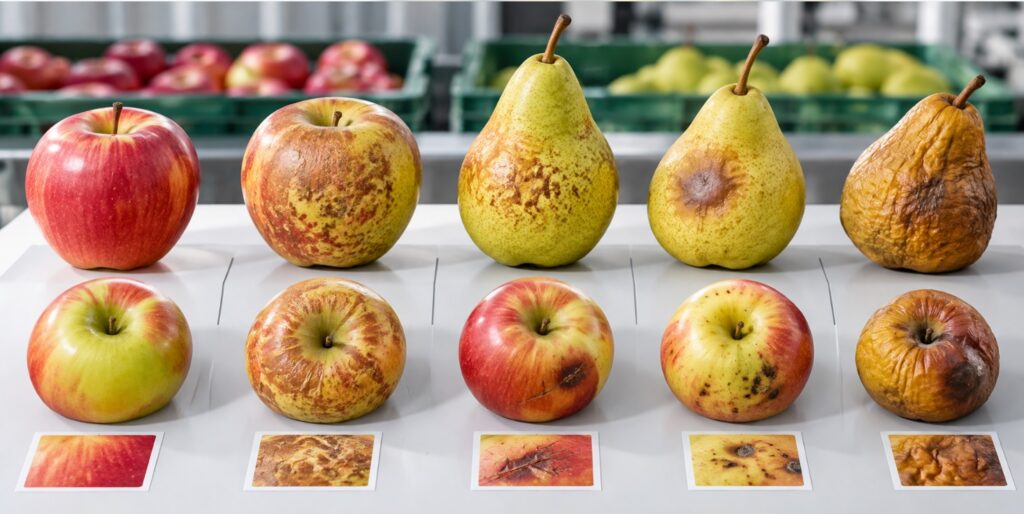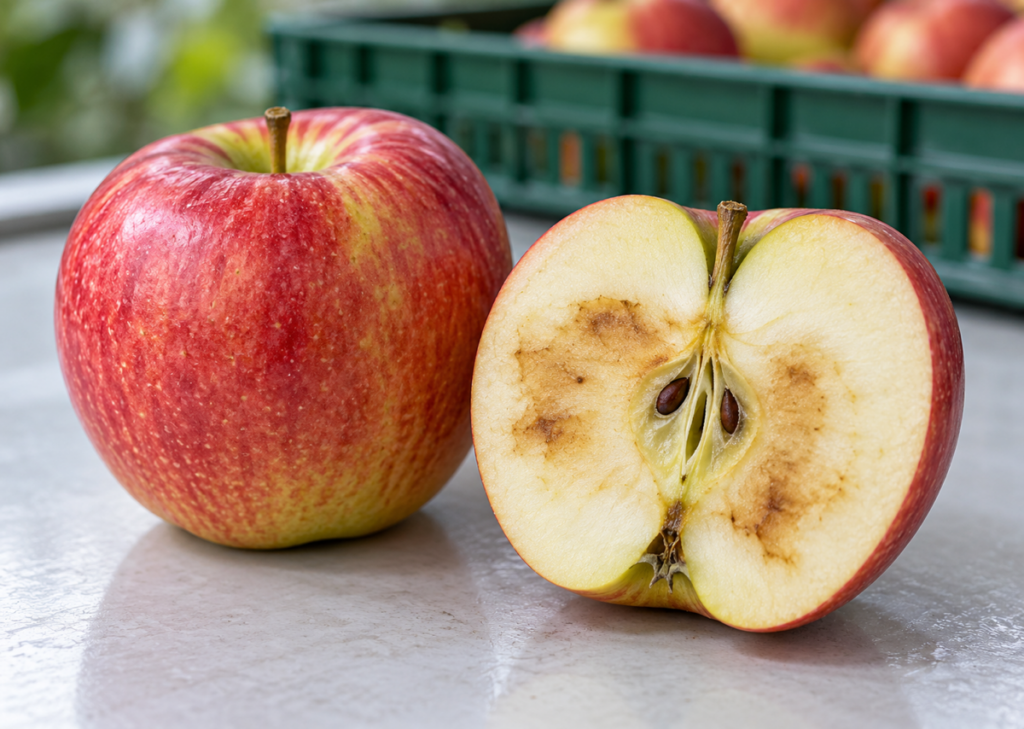
Fresh produce suppliers and retailers across regions are encountering a consistent problem: customer rejections or claims caused by quality variances.
Regardless of region or product type, many operations are dealing with the same root issues when it comes to retaining customers. They’re also finding that the same kinds of data-driven quality management practices produce consistent improvements.
This makes churn reduction not just a goal, but a direct outcome of consistently measuring and improving quality.
Quality Mismatch Drives Vendor Switching
A recurring pattern across markets and product categories is quality mismatch: a weak link between what the buyer expects and what the supplier delivers.
This mismatch often arises from three key factors:
1: Buyers and suppliers have different quality standards
Many suppliers and buyers operate under different grading systems, defect definitions or tolerance levels. One market may label minor skin blemishes as acceptable, while another may reject any visible mark.
Without a standardized quality spec , the result is that some consignments meet internal supplier criteria but fall short of the buyer’s expectations — which then leads to rejections or claims.
Many growers operate under unclear or frequently changing contract specifications, or vague and variable standards that create operational and financial uncertainty.
2: Subjective inspection methods lead to variable results
Traditional inspection often relies on human judgement. Inspectors grade produce manually and rely on visual checks. Line-sampling is another time-saving measure that human teams are forced to use in order to keep operations flowing.
But these methods sacrifice accuracy and introduce variability, leading to unpredictable outcomes. What one packhouse sees as “passable” another may deem “reject.” The consequence is inconsistent quality reaching customers.
3: The real-time data required for proactive action simply isn’t there
When inspection results, packing data or logistics quality metrics are only reviewed after shipment, it’s too late to adjust that batch or change the routing. Many operations work with lagging indicators (post-shipment complaints or returns) rather than real-time insights.
Without live data from packing lines and quality inspections, the ability to intervene before a shipment moves is limited.
Digital QA Standardization: Similar Results Across Diverse Markets
When organisations adopt a standardized, objective QA process, the outcomes are strikingly similar across regions and categories. Some of the consistent benefits include:
- 20–36% reduction in rejections (depending on product category and region).
- 2–3× increase in inspection productivity, as manual steps are replaced by digital capture and grading logic
- Decreases in customer claims and faster resolution cycles, because issues are caught earlier and with better traceability
- Improved supplier-to-buyer alignment, supported by transparent, standardized data
These results have been replicated in operations handling grapes in South America, citrus in North America, and exotic produce in Asia & EMEA, demonstrating that the solution doesn’t depend on climate or crop, but on process and data alignment.
Process Consistency Strengthens Customer Retention
The link between improved QA processes and lower rejection rates centres on reliability and predictability.
Customers in the retail, wholesale or food service sectors want produce that meets agreed specifications, shipment after shipment. When QA data becomes standardised, visible and comparable:
- Disputes decline, because there’s objective evidence of batch quality.
- Shipments arrive as expected, reducing last-minute substitutions or quality surprises.
- Buyers strengthen relationships with suppliers, because the risk of underspecification or cancellation diminishes.
Three operational shifts drive those improvements:
- Unified grading criteria: By formalising inspection standards (e.g., defect thresholds, sorting rules) and applying them uniformly across sites and facilities, the subjectivity drops and consistency rises.
- Real-time visibility: Dashboards and digital tools alert operations teams to deviations as inspection results come in (rather than days later). That allows proactive regrading, rerouting or corrective action before the product leaves the packhouse.
- Analytics-based decision-making: Historical QA data, defect trends, and supplier performance insights turn inspection into intelligence. Suppliers can address root causes (varietal issues, packline defects, facility performance) rather than just reacting to claims.
When these are in place, the combined effect is fewer rejected shipments, fewer buyer-switch decisions, and measurable declines in customer churn.
Consistent Outcomes, Independent of Region
Each region faces its own operational environments like humidity, labour constraints, logistics geography, regulatory regimes. But the underlying quality-control issues and their digital solutions are remarkably consistent.
The process is essentially the same whether you’re working pineapples in Southeast Asia, grapes in South America, or citrus in Southern Europe:
- Digitise inspections.
- Standardise criteria.
- DFeed data upstream and downstream.
Incremental changes (for instance expanding sampling size, introducing outbound inspection, or moving inspection closer to field) also show measurable ROI. But the basis is the same globally.
Data-Led QA as a Retention Mechanism
Fresh produce is among the most volatile global categories, marked by relentless price volatility and product perishability. For quality managers and procurement leads, this means daily uncertainty — balancing shelf-life, consistency, and supplier performance in an environment where even minor disruptions can cascade into customer churn. Trust and predictability are becoming key determinants of long-term buyer relationships.
Digital, standardised QA isn’t just about reducing waste. It’s about reducing rejections and claims. When dispatch quality is predictable, traceable, and aligned with buyer specifications, customers are more likely to stay.
Book a call to learn more about cutting churn through measurable quality control.