FRUIT LOGISTICA 2026: Quality Data and the Cost of Claims
- Quality Control App
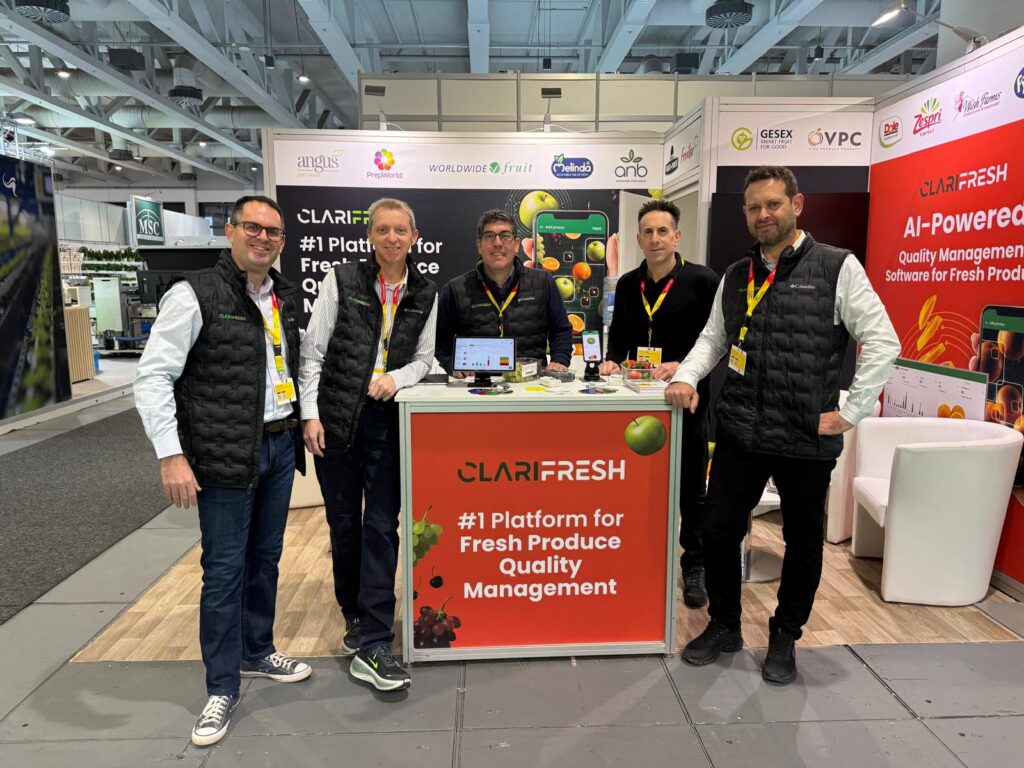
Like it does every year, FRUIT LOGISTICA 2026 provided a reliable snapshot of where the fresh produce sector is heading. This year’s event showed how quality control, historically one of the least digitized areas of the supply chain, is moving into a new phase of technological development.
Quality is the last major digitization gap in agri-food
For much of the past decade, agrifood technology investment has concentrated heavily on upstream innovation. According to the AgFunder Global AgriFoodTech Investment Report 2025, upstream categories like ag biotechnology, farm robotics, and novel farming systems accounted for 51% of total agrifoodtech funding in 2024. By comparison, midstream technologies, which include food safety, traceability, and processing solutions, represented just 11% of total funding.
That distribution reflects how capital has historically flowed: toward improving yields, automating field operations, and advancing biological inputs, as well as toward consumer-facing technologies.
The technology gap in the middle
Yet midstream technologies responsible for safeguarding product quality between harvest and retail have carried disproportionate commercial risk relative to their share of investment.
This imbalance helps explain why quality control in fresh produce has remained comparatively manual and subjective. Production has become data-driven, but inspection processes still rely on human visual sampling and inefficient documentation.
Quality emerges from the investment margins
The same AgFunder report notes that midstream technologies experienced a 41% year-over-year increase in funding in 2024, signaling renewed investor interest in supply chain resilience and verification systems.
That suggests recognition that efficiency gains upstream can be undermined downstream if quality variability, disputes, and waste remain unaddressed.
What advanced AI quality control systems can now do
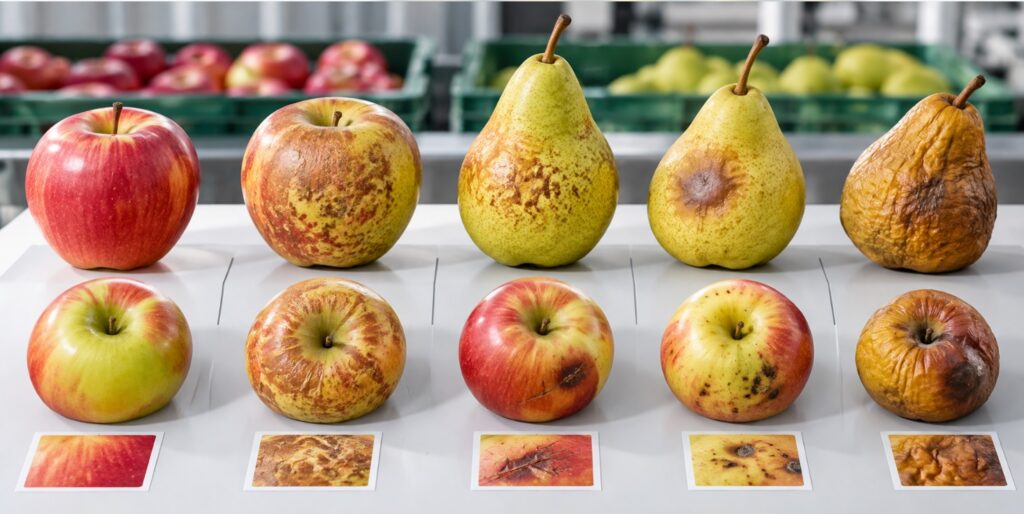
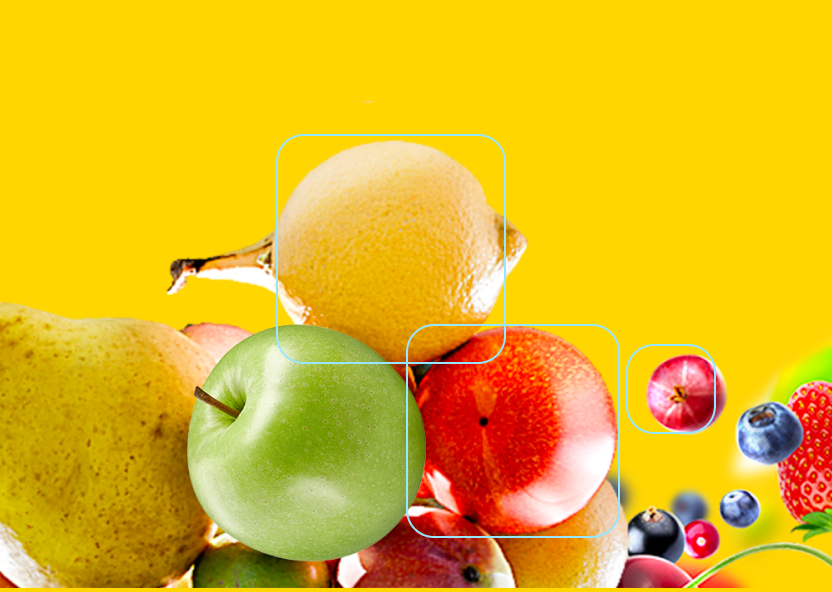
At the event, demonstrations of automatic defect identification through Clarifresh’s mobile app in strawberries and citrus drew interest from attendees for its ability to classify defect types, severity, and shelf life implications. These systems can detect complex defects that previously required expert human assessment:
- subtle disease symptoms
- irregular ripening patterns
- stem and calyx issues in strawberries
- rind damage gradations in citrus
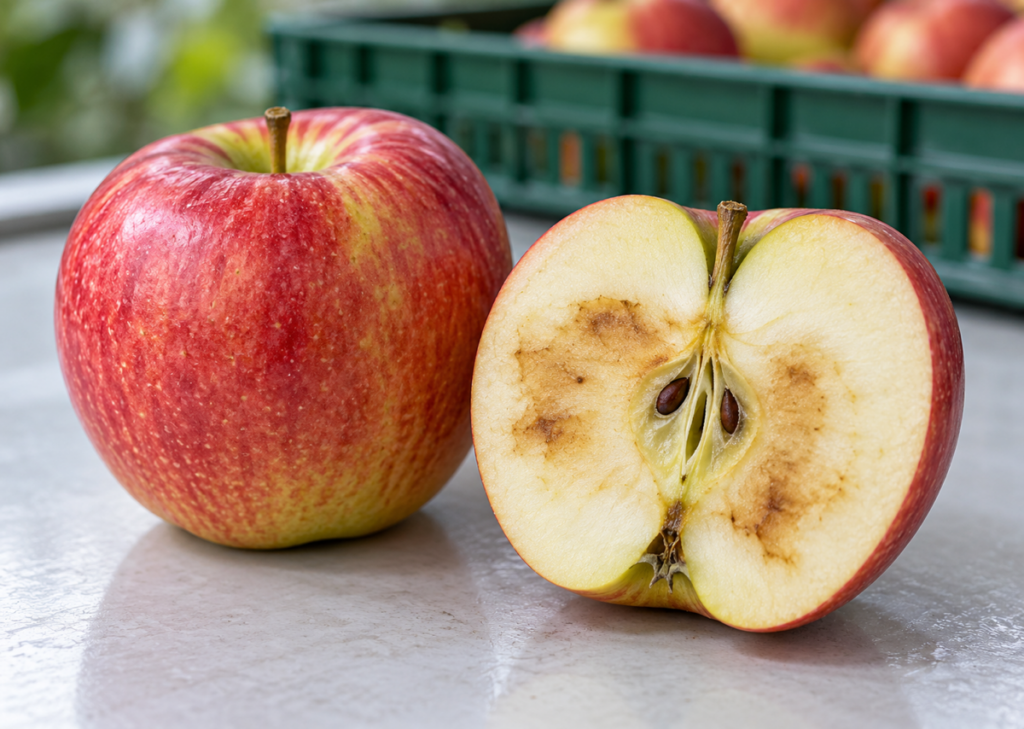
- early-stage decay that might not be visible to casual inspection
The impact on claims: prevention is better than cure
Across meetings with growers, exporters, and retailers at FRUIT LOGISTICA, reducing claims was described as a business priority.
In today’s environment:
- Retailers enforce tighter, lot-specific specifications.
- Supplier scorecards increasingly factor in rejection rates and dispute frequency.
- Private label growth raises the cost of inconsistency.
- Sustainability commitments increase scrutiny on waste tied to rejected loads.
- Export markets demand clearer documentation of condition at origin.
When margins are narrow, even modest rejection rates can materially affect profitability. But many claims do not stem from catastrophic failures. They arise from disagreement: differences in interpretation of defect severity, ripeness stage, or acceptable tolerance thresholds.
By capturing structured, standardized assessments at origin, advanced systems:
- Apply consistent grading logic across facilities and inspectors
- Classify defect type and severity with greater precision
- Create time-stamped visual documentation tied to specific lots
- Surface early quality risks before shipment
The result is not just faster resolution of disputes, but fewer disputes to begin with. In that sense, advanced AI quality control is an essential tool for risk reduction as quality expectations tighten across global supply chains.
Where the shift is taking hold
Adoption is not uniform, but the momentum is visible across regions.
North America appears to be leading the transition toward structured, AI-supported inspection. At the same time, interest is expanding beyond early adopters.
- The Netherlands remains a global hub for fresh produce trading and export, facing pressure to maintain consistent quality verification across international markets.
- The UK continues to operate within one of the most specification-driven retail environments in Europe.
- Italy, with its strong export orientation in apple and other specialty crops, is increasingly focused on protecting brand reputation in premium markets.
- Across Central and South America, exporters supplying North American and European retailers are recognizing that documented quality at origin can strengthen negotiating power and reduce downstream disputes.
Clarifresh and the Next Phase of Quality
At FRUIT LOGISTICA, interest did not come only from buyers and operators. There were also conversations with other technology providers evaluating how inspection standards are evolving.
That kind of peer engagement typically signals that a category is maturing.
As computer vision moves from experimental pilots to operational deployment, the differentiators shift. It is no longer simply about detecting obvious surface defects. It is about:
- Dataset depth and diversity
- Consistency across commodities and geographies
- Integration into real workflows
- The ability to translate inspection data into commercial outcomes, such as claims reduction
The investment signals, the regulatory environment, and the commercial pressures are aligning. For the first time, quality verification is not trailing behind innovation in other parts of the supply chain. It is becoming one of its central drivers.