More Apples, More Challenges: What Germany’s 2025 Bumper Harvest Really Means
- Quality Control App
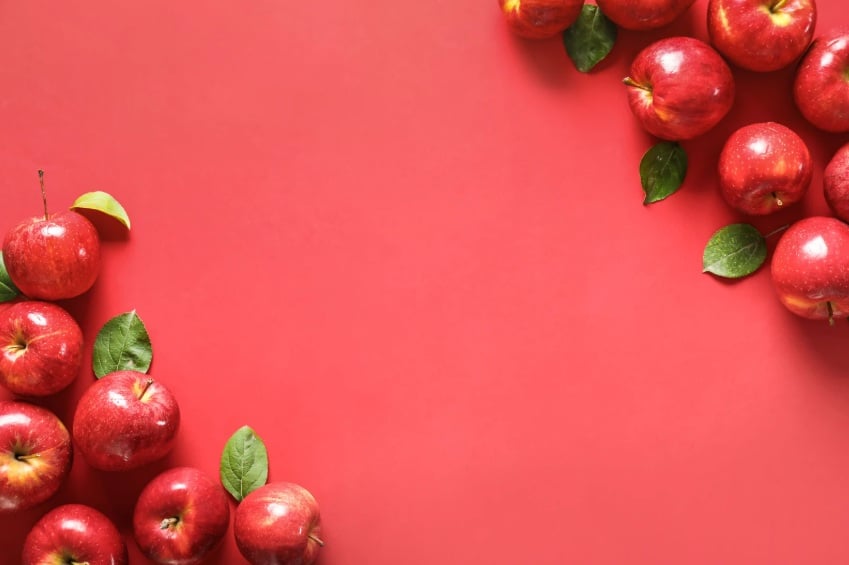
Germany is preparing for one of its strongest apple seasons in years. According to the Federal Statistical Office, growers expect to harvest over 1 million tons of apples in 2025. It’s the first time since 2022 that production crosses the million-tonne mark. That’s 15.7% more than last year and nearly 4% above the ten-year average.
Everything has lined up just right for German apple growers. They’re enjoying mild spring weather, with no late frosts. The hailstorms that often devastate orchards are also holding off this year. So, across the country’s major growing regions, from Baden-Württemberg in the south to Lower Saxony in the north, trees are heavy with fruit.
It’s an impressive success story for growers, but one that carries hidden complexity. In fresh produce, abundance brings as many risks as scarcity. A bumper harvest reshapes storage demand, price dynamics, and consumer expectations. It can also put unprecedented pressure on quality control systems.
Opportunity and Risk in Abundance
For the fresh produce industry, a strong harvest is always a mixed blessing.
The Upside
- Growers benefit from higher yields, which can offset costs and build new retailer relationships.
- Retailers gain leverage to run seasonal promotions and position themselves as price leaders.
- Consumers see fuller shelves. They enjoy wider choice at their local supermarket, at more affordable prices.
The Downside
- Oversupply depresses prices, often below levels that sustain grower margins.
- Storage facilities fill quickly, forcing fruit into less-than-ideal conditions.
- Spoilage risks rise as more produce competes for cold chain capacity.
Abundance demands discipline. Without effective post-harvest planning, a record crop can create record losses. That’s why bumper harvests are a stress test of supply chain resilience.
Quality Management at Scale
Apples may be plentiful, but retailers and consumers don’t buy “tons”. They buy trust. That trust depends on consistent grading and reliable quality, batch after batch, crate after crate. Apple quality control needs to account for wide variations in size, color, shape, and even taste.
- Apples must be checked for size, shape, color, firmness, and bruising.
- Manual inspections slow under pressure, creating bottlenecks at packhouses and warehouses.
- Subjectivity creeps in: what one inspector calls “Grade A” another may flag as borderline.
- Defects slip through, leading to rejections downstream or unhappy consumers at shelf.
The cost of these errors compounds in bumper years. A single misgraded pallet can mean hundreds of kilos of fruit wasted. Or worse, spoilage can spread through storage facilities. When volumes surge, quality control bottlenecks go from being operational irritants to margin killers.
Retail & Consumer Dynamics
For retailers, bumper crops are both a marketing opportunity and a strategic risk.
On the one hand, abundant supply allows them to launch eye-catching promotions. Shoppers love seeing bins full of crisp apples at prices that feel like a bargain. Done well, this boosts traffic and reinforces a retailer’s value-for-money positioning.
On the other hand, the risks are substantial:
- Inconsistent quality undermines shopper trust. One bruised apple in a discounted pack can negate the impact of a whole campaign.
- Shrinkage eats into promotions. If discount-driven volumes are high but spoilage rates rise, margins quickly erode.
- Consumer expectations rise, not fall. Shoppers don’t excuse defects just because apples are cheaper. They expect abundance to mean abundance of quality.
This is the “margin trap” of bumper years: more volume, more promotions, but also more waste. Retailers and suppliers that don’t align on quality-first execution risk turning an abundant harvest into a financial headache.
Tech, Data & Them Apples: AI-Powered QC as the Equalizer
The scale of Germany’s 2025 harvest highlights why technology is no longer optional in fresh produce quality management. Manual processes simply can’t keep pace with today’s supply chain realities.
Here’s where advanced QC systems shift the balance:
- AI-powered inspections deliver consistent grading across millions of apples, eliminating subjectivity and speeding up throughput.
- Real-time QC alerts flag bruising, rot, or ripeness variability as soon as it appears, enabling rapid corrective action.
- Predictive analytics turn QC data into business intelligence. Align distribution with shelf-life potential, guiding promotions to the right batches, and avoid costly oversupply in specific channels.
- Mobile QC tools empower inspectors to capture data directly in orchards, storage facilities, or retail hubs, ensuring insights flow seamlessly across the chain.
This combination creates strategic leverage. Retailers notice when a grower or supplier can guarantee consistency at scale. They reward reliability with better contracts, more shelf space, and longer-term trust.
Beyond 2025: What This Season Teaches Us
Germany’s 2025 apple season will be remembered for its abundance. But “more” is only “better” if it’s managed well. And good management here means different things for different stages in the fresh produce supply chain.
For growers, the bumper harvest is a chance to demonstrate professionalism and consistency, setting themselves apart in a crowded marketplace.
For retailers, it’s a test of whether their supply partners can deliver abundance without chaos.
For the entire supply chain, it’s proof that quality is the true currency of fresh produce.
More Apples, Less Waste
A record harvest is good news. But without scalable quality control, it can just as easily become a record problem.
The businesses that thrive in 2025 won’t necessarily be the ones with the fullest orchards. They’ll be the ones with the smartest systems that can ensure every apple that reaches a consumer is crisp, uniform, and on time.
Because in fresh produce, success has never been just about how much you grow. It’s about how much quality you can deliver, at scale, without letting abundance turn into waste.